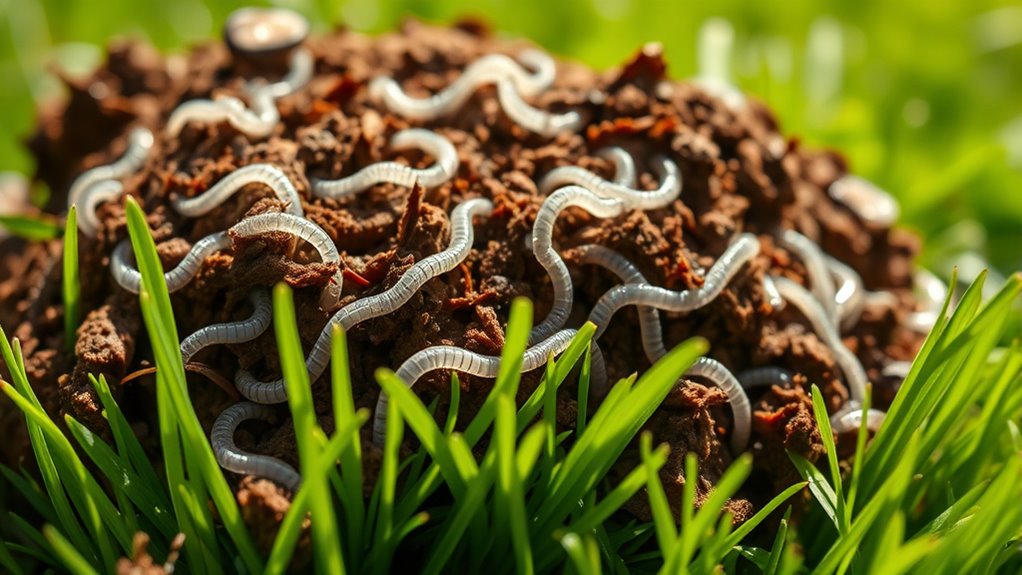
What Do Worms Look Like in Dog Poop?
You’ll often spot long, white, spaghetti-like roundworms in your dog’s poop, which are easy to notice and several inches long. These worms are a common sign of infection and pretty hard to miss once you know what to look for.
Small, flat tapeworm segments that look like rice grains might appear around your dog’s anus or in their feces. They can sometimes wiggle or move, so keep an eye out for these little white pieces.
Some worms, like hookworms and whipworms, are microscopic and need lab testing to detect since they don’t show visibly. Even though you can’t see them, they can cause symptoms like diarrhea or blood in your dog’s stool.
Keeping an eye out for these signs is really important to protect your pup’s health. Exploring further will help you recognize all the signs better and keep your furry friend happy and healthy.
Key Takeaways
- Roundworms appear as long, white, spaghetti-like strands several inches long and are easily visible in dog feces. You can usually spot them without much trouble.
- Tapeworms show up as small, flat, white or yellowish rice-sized segments around the anus or in poop. They kind of look like tiny grains of rice.
- Microscopic worms like hookworms and whipworms are not visible to the naked eye and require lab fecal exams. So, you won’t see these guys just by looking.
- Blood in stool, diarrhea, or visible worm segments indicate possible worm infestation in dogs. If you notice any of these signs, it’s a good idea to check with your vet.
- Regular fecal inspections and vet checkups are essential for early worm detection and treatment. Keeping an eye on your dog’s health helps catch worms before they cause serious problems.
How to Spot Different Worms in Your Dog’s Poop?

Spotting different worms in your dog’s poop can help you identify potential health issues early. When you notice visible worms, such as long, white, spaghetti-like roundworms, it’s a clear sign of a parasitic infection.
Tapeworm segments, which look like small, flat grains of rice, may appear around your dog’s anus or in the feces. These signs are vital for diagnosis and prompt treatment. But not all worms are visible to the naked eye.
Hookworms and whipworms usually require a fecal exam since they’re microscopic. Still, they can cause symptoms like blood in the stool and diarrhea.
Detecting these worms early protects your pet’s health and prevents serious complications. So, if you suspect a parasitic infection, consult your vet for proper diagnosis and treatment.
Regularly checking your dog’s poop and getting timely fecal exams are key steps in keeping your dog healthy. It helps catch worms before they cause significant harm.
Identifying Visible and Microscopic Worms in Dog Poop

When you examine your dog’s poop, you might notice worms that vary in size and appearance. Visible worms often include long, white roundworms that resemble cooked spaghetti or rubber bands. These roundworms can be several inches long, making them easy to spot in feces.
You may also find tapeworm segments—small, rice-sized, white or yellowish pieces—either around your dog’s anus or mixed within the dog poop. However, some intestinal parasites like hookworms and whipworms aren’t visible to the naked eye.
To identify these microscopic worms and parasite eggs, a lab test is necessary. The worm appearance in dog poop depends on the type and extent of infestation, so not all worms are obvious.
Frequently Asked Questions
What Can Be Mistaken for Worms in Dog Poop?
You might mistake undigested food, plant material, mucus threads, or dark specks for worms in dog poop. Sometimes medications or supplements change stool appearance, making harmless debris look like parasites.
But they usually aren’t actual worms. It’s pretty common to see stuff that looks suspicious but turns out to be nothing harmful. So, don’t worry too much if you spot something unusual!
How Can I Tell if My Dog Has Worms?
You’ll know your dog has worms if you spot rice-like segments or spaghetti-like worms in their poop. You might also notice diarrhea, weight loss, or scooting.
It’s best to confirm with a vet’s fecal test for eggs or larvae to be sure. That way, you can get the right treatment started quickly.
What Is the Fastest Way to Deworm a Dog?
The fastest way to deworm your dog is to give a vet-prescribed broad-spectrum dewormer on an empty stomach. Make sure to follow the dosage carefully.
Also, clean your dog’s environment to prevent re-infestation. It’s a good idea to schedule follow-up fecal tests to confirm the treatment was successful.
Can I Touch My Dog if He Has Worms?
Wondering if you can touch your dog when he has worms? Yes, you can—but you should wash your hands thoroughly afterward.
Also, try to avoid direct contact with his mouth or anal area to keep yourself safe and healthy. It’s all about being careful!
Conclusion
Now that you know what different worms look like in your dog’s poop, you’ll be better prepared to spot them early. For example, imagine finding tiny white rice-like segments—these are tapeworms, which need prompt treatment.
Catching these signs quickly can save your pup from discomfort and more serious health issues. Always check your dog’s stool regularly and consult your vet if you notice anything unusual.
Staying vigilant helps keep your dog happy and healthy! Regularly inspecting your dog’s poop for worms is key. Early detection of worms in dog poop can prevent complications and ensure your furry friend stays safe. Don’t hesitate to reach out to your vet if you suspect worms, because timely action is the best way to protect your dog’s health.