

How to Cut Overgrown Dog Nails in 5 Easy Steps
To cut overgrown dog nails in five easy steps, start by staying calm and gathering sharp clippers or a grinder. Find a quiet space to make the experience as stress-free as possible for both you and your dog. Having the right tools and a peaceful environment really helps when trimming your dog’s nails.
Next, position your dog comfortably, holding their paw gently but securely. This keeps your dog relaxed and prevents any sudden movements. Take a moment to identify the quick—look for pink or grayish areas inside the nail. Avoid cutting into the quick to prevent pain and bleeding.
Trim small amounts gradually, stopping immediately if you see the quick or any blood. It’s better to take it slow and steady than to rush and hurt your dog. Regular trims every 3-4 weeks keep nails healthy and your dog comfortable.
Keep going to discover more helpful tips!
Key Takeaways
– Calm your dog and gather sharp clippers or grinders in a quiet, well-lit area before trimming.
This helps keep things smooth and stress-free for both of you.
– Position your dog comfortably and hold the paw securely to prevent sudden movements.
A steady hold makes the process safer and easier.
– Identify the quick by looking for pink or grayish-pink areas and trim gradually to avoid cutting it.
Take your time here to avoid causing pain or bleeding.
– Trim small nail sections following the natural nail shape, stopping immediately if the quick or blood vessels appear.
It’s better to trim little by little than risk hurting your dog.
– Trim nails every 3-4 weeks to maintain healthy nails and reward your dog with treats to build positive associations.
Keeping a routine and giving treats will make future nail trims much easier!
Why Calmness and Tools Matter Before Trimming
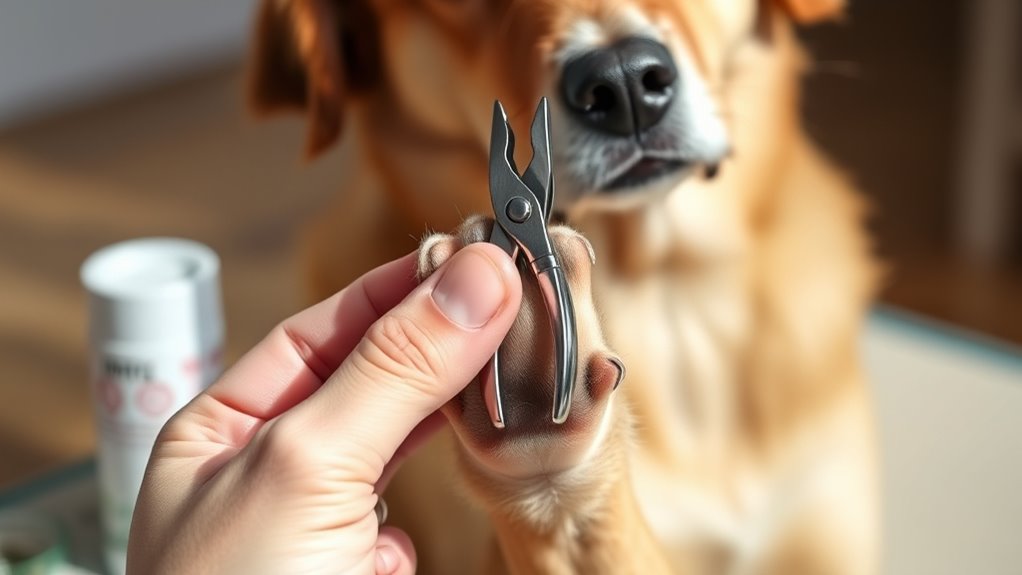
Before you start trimming your dog’s overgrown nails, staying calm and having the right tools ready can make all the difference. When you remain calm, your dog picks up on your relaxed energy, reducing stress and anxiety during nail trimming.
Stay calm and prepare proper tools to ease your dog’s stress during nail trimming.
Using sharp clippers or grinders designed specifically for dogs ensures clean cuts, minimizing discomfort and preventing injury. Preparing a quiet, well-lit environment also helps your dog feel safe and relaxed before grooming begins.
You should gently introduce your dog to the nail trimming tools ahead of time, desensitizing them to the sensations and sounds. This builds your dog’s trust and confidence, making future sessions easier.
Handling your dog with calm confidence reinforces this trust, reducing fear and resistance. By creating a positive, stress-free atmosphere and using the right tools, you set the stage for successful nail trimming that benefits both you and your furry friend.
Position Your Dog for Nail Trimming
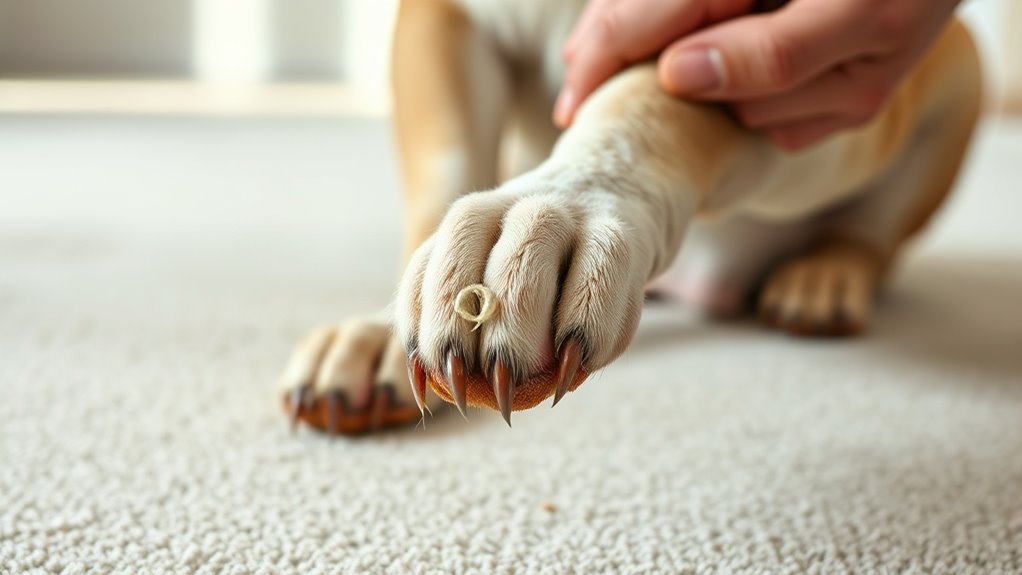
When you position your dog in a comfortable, stable spot—like a grooming table or your lap—you make nail trimming safer and easier for both of you. Make sure your dog is calm and relaxed before you start. Tense muscles can make handling paws a lot harder.
Choose a place that offers stability and comfort to support good posture for both you and your dog during grooming. Hold your dog’s paw close to their body with one hand, gently but securely, to prevent sudden movements. Use your thumb and forefinger to lift and extend each nail for better control.
If your dog is anxious or fidgety, it might help to have a second person gently hold them. This can improve safety and make it easier to see what you’re doing. Keeping your dog secure yet relaxed throughout the process helps reduce stress and makes nail trimming a smoother experience for both of you.
Identify the Quick to Avoid Pain and Bleeding

Although identifying the quick can be tricky, learning to recognize it is essential to avoid causing your dog pain or bleeding during nail trimming. The quick is a pink area inside the nail that supplies blood and nerves.
Recognizing the quick is vital to prevent pain and bleeding when trimming your dog’s nails.
In light-colored nails, you’ll see it as a darker pink area, making it easier to avoid. Overgrown dog nails with dark coloring can hide the quick as a small, grayish-pink oval or a black dot, so you need to be extra cautious.
When you trim the nail, cut off small parts gradually, watching closely for signs of the nail quick. Stop trimming as soon as you spot the black dot or grayish-pink oval to prevent bleeding and avoid pain.
Over time, the quick recedes, allowing you to trim more nail safely in future sessions. Always take your time to identify the quick properly before you trim to keep your dog comfortable and safe.
Trim or Grind Your Dog’s Nails Confidently
After you’ve identified the quick, you can start trimming or grinding your dog’s nails with confidence. Use nail clippers or a nail grinder to carefully follow the nail’s natural shape. Trim small amounts to avoid cutting into the quick.
When using a nail grinder, support the toe firmly and work in short bursts. Smooth the entire nail from tip to base.
Keep an eye out for dark blood vessels or the quick. Stop immediately if you see them to prevent injury.
Overgrown nails may require several sessions. Trim gradually so the quick recedes safely without pain or bleeding.
Always maintain a calm, confident motion to help your dog stay relaxed. Don’t forget to reward your dog with treats and praise during and after each session.
This builds positive associations, making future nail care easier and less stressful for both of you. This approach guarantees you trim or grind your dog’s nails effectively and safely.
Maintain Healthy Dog Nails With Regular Trims
Because regular trims keep your dog’s nails at a healthy length, you’ll prevent discomfort and potential health issues. Nail trimming every 3-4 weeks helps the quick to recede gradually, making it easier to manage overgrown nails safely.
For dogs with light-colored nails, you can see the quick clearly, so it’s easier to trim nail tips without causing pain. Use sharp clipper tools and trim a little at a time to avoid cutting too deep.
Regular trims also prevent toe splaying and deformities, supporting your dog’s overall paw health and comfortable movement. Remember to offer praise and treats during and after trimming to create a positive experience for your dog.
Keeping up with regular trims not only prevents discomfort but also promotes lasting dog health and traction. Staying consistent with nail care is key to avoiding painful overgrown nails and ensuring your dog’s paws stay healthy and strong.
Frequently Asked Questions
How Do You Trim Severely Overgrown Dog Nails?
You trim severely overgrown dog nails gradually, clipping small sections to avoid pain. Use gentle, confident motions, watch for the quick, and be patient.
Regular sessions help the quick recede safely over time. Just take it slow and steady, and your dog will thank you!
How to Cut a Big Dog’s Nails That Won’t Let You?
Imagine a calm river flowing as you gently hold your big dog’s paw. You’ll take breaks, use treats, and introduce trimming tools slowly, turning stress into trust.
Or get professional help if they still won’t cooperate.
How Do I Shorten My Dog’s Nail Quickly?
You can shorten your dog’s nails quickly by trimming small sections with a sharp clipper, avoiding the quick.
Use a grinder for smooth edges and apply styptic powder if you accidentally cause bleeding to stop it fast.
How Far Back Can You Cut Overgrown Dog Nails?
“Measure twice, cut once.” You should only trim back to where the quick is visible, never past it.
Take small, cautious cuts over time, letting the quick recede gradually to avoid pain or bleeding.
It’s better to go slow and steady than to rush and cause discomfort. Just be patient—your dog will thank you!
Conclusion
Cutting your dog’s overgrown nails might feel tricky, but with patience and the right tools, you can do it safely at home. If you’re worried about hurting your dog or causing bleeding, just remember to trim slowly and stop at the quick.
Regular trims keep nails healthy and prevent discomfort. Once you get the hang of it, you’ll both feel more relaxed—and your dog will thank you for the care!
Taking the time to cut overgrown dog nails properly is super important for your pup’s comfort and health. With these easy steps, you can confidently manage nail trimming at home without stress. Just keep a steady hand, be gentle, and make nail care a regular habit. Your dog’s paws will stay healthy, and you’ll both enjoy those happy, scratch-free days!