
How to Induce Vomiting in a Dog With 5 Easy Steps
If your dog has ingested something harmful within the last 2 hours and is alert, you might consider inducing vomiting— but only with your vet’s approval. This method can help get rid of toxins before they cause serious problems. It’s important to act quickly and carefully to keep your pup safe.
First, calculate the correct dose of 3% hydrogen peroxide: give 1 teaspoon per 5 pounds of your dog’s body weight. Make sure not to exceed 3 tablespoons in total. Use a syringe to gently squirt the solution into your dog’s mouth.
Afterward, take your dog outside and encourage vomiting within about 15 minutes. Keep a close eye on them afterward, watching for any complications or unusual behavior.
If you want to learn how to do this safely and understand the signs to watch for, keep reading!
Key Takeaways
- Confirm ingestion was within 2 hours and the dog is alert; avoid if the substance is harmful or the dog shows distress.
- Calculate dose: 1 teaspoon (5 ml) 3% hydrogen peroxide per 5 pounds of the dog’s weight. For dogs over 45 pounds, don’t exceed 3 tablespoons.
- Use a syringe to carefully squirt the measured hydrogen peroxide into the back of the dog’s mouth.
- Immediately walk the dog outdoors to encourage vomiting within 10-15 minutes.
- Keep an eye on your dog after vomiting. Offer water gradually, and if vomiting doesn’t happen or any complications come up, contact your vet right away.
When Should You Induce Vomiting in Your Dog?
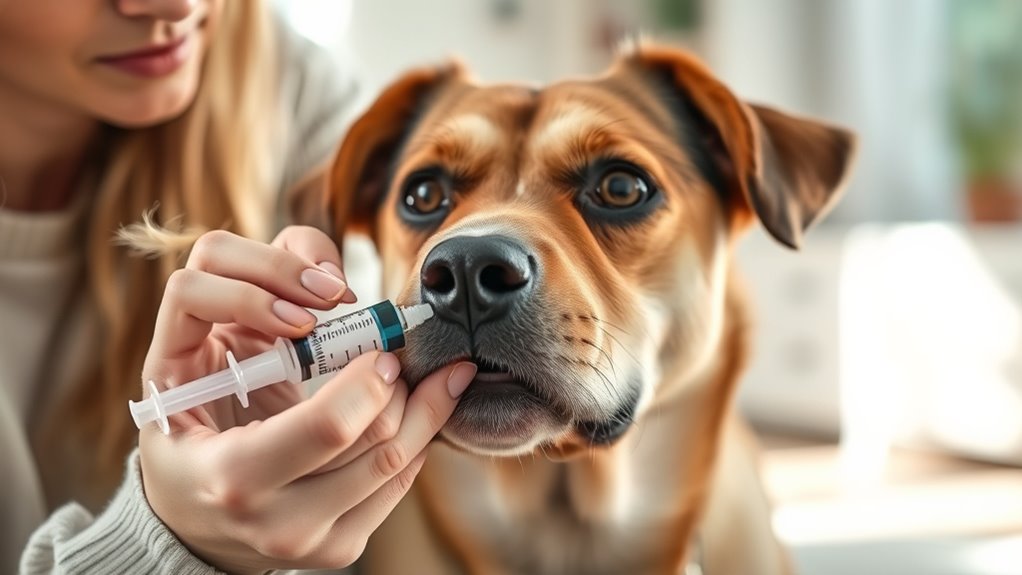
When should you induce vomiting in your dog? You should only consider inducing vomiting if your dog has ingested a toxic substance within the last two hours and is alert and healthy.
It’s vital to avoid inducing vomiting if your dog shows signs of distress, like vomiting on its own or neurological symptoms. Before you use hydrogen peroxide or any other method to induce vomiting, contact your vet for approval and guidance.
Never induce vomiting if the substance ingested is caustic, sharp, petroleum-based, or could cause more harm coming back up, like acids or alkalis. Your dog’s safety is the most important thing, so in any emergency involving potential poisoning, getting immediate veterinary advice is essential.
If you’re unsure about what your dog ingested or notice severe poisoning signs, don’t try to induce vomiting yourself—leave it to the professionals. Following these safety steps ensures you’re doing the best for your dog.
How to Calculate the Right Hydrogen Peroxide Dose
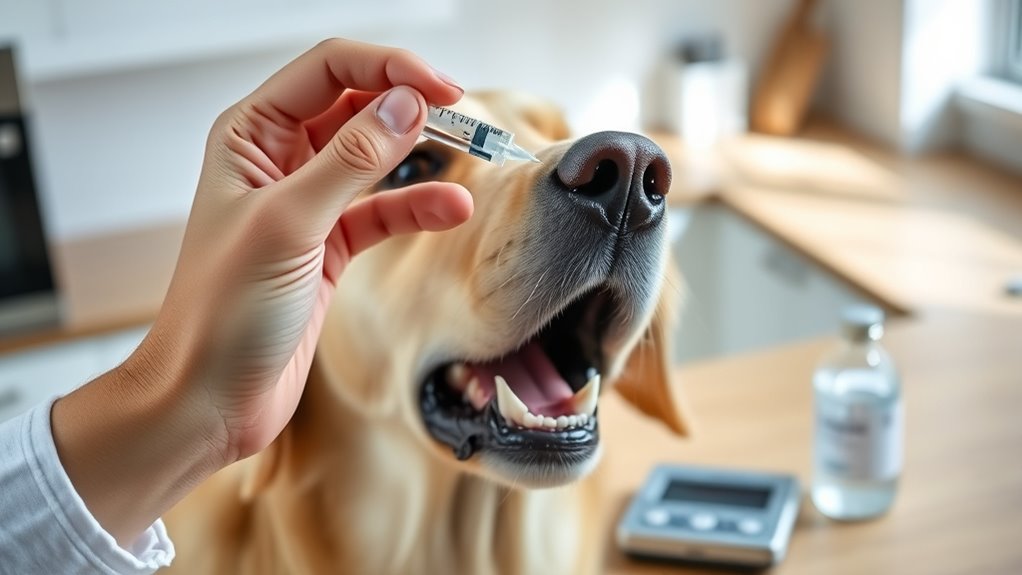
If your vet has given the go-ahead to induce vomiting, calculating the right dose of hydrogen peroxide is key to doing it safely. The standard dose calculation for 3% hydrogen peroxide is 1 teaspoon (5 ml) per 5 pounds of your dog’s body weight.
For example, a 10-pound dog needs 2 teaspoons, while a 20-pound dog requires 4 teaspoons. Use a dosing chart as a quick reference to avoid guesswork and guarantee accurate measurement.
For dogs over 45 pounds, don’t exceed the maximum dose of 3 tablespoons (45 ml) to prevent complications. Always measure the peroxide carefully with a syringe or teaspoon to avoid overdose.
Following veterinary guidance on dose calculation helps minimize the risk of toxicity. Never guess doses or ignore weight limits, as too much hydrogen peroxide can harm your dog.
Adhering to vet-approved dosing prevents toxicity and protects your dog from hydrogen peroxide overdose.
Accurate dosing is essential to safely induce vomiting and protect your pet’s health.
How to Give Your Dog Hydrogen Peroxide Safely

Although inducing vomiting can be necessary in emergencies, you need to handle hydrogen peroxide carefully to keep your dog safe. Use only 3% hydrogen peroxide, making sure it’s fresh and not expired.
Calculate the proper dosage—1 teaspoon (5 ml) per 5 pounds of your dog’s weight, with a maximum of 3 tablespoons for larger dogs. For safe administration, use a syringe or turkey baster to gently squirt the hydrogen peroxide into the back of your dog’s mouth, avoiding the throat to prevent choking.
After giving the dose, walk outdoors with your dog to encourage vomiting, which usually happens within 10-15 minutes. Keep a close eye on your dog during this time for signs of vomiting or distress.
If your dog doesn’t vomit within 15-20 minutes, contact your veterinarian immediately. Following these steps helps you safely induce vomiting while minimizing risks to your dog’s health.
What to Do After Your Dog Throws Up
After your dog vomits, keep a close watch for the next 15-20 minutes to make sure they’re recovering well. During this time, monitor your dog closely for any signs of distress or continued vomiting.
Also, take a good look at the vomit to check for any toxins or foreign objects that might need more attention. It’s really important to keep your dog calm by giving them a quiet, comfortable spot to rest.
Once the vomiting stops, try offering small amounts of water slowly. This helps prevent dehydration without upsetting their stomach further.
Keep an eye out for any unusual behaviors or symptoms that might signal complications. And if your dog keeps vomiting or you notice anything strange, don’t hesitate to call your vet right away.
Taking care after vomiting like this helps your dog recover safely and lets you know if professional help is needed. Staying alert during this time is key to supporting your dog’s well-being.
Recognizing Complications and When to Call the Vet
When your dog vomits, you need to stay vigilant for signs that indicate a more serious problem. Persistent vomiting, difficulty breathing, or neurological signs like seizures mean you should seek urgent veterinary care immediately.
If your dog vomits and shows persistent vomiting, breathing trouble, or seizures, seek urgent veterinary care immediately.
Watch closely for symptoms such as pale gums, excessive drooling, or collapse after inducing vomiting—these are red flags requiring a veterinary emergency. Aspiration pneumonia is another serious complication; if your dog coughs or struggles to breathe after vomiting, contact your vet right away.
Worsening symptoms, including continuous vomiting, lethargy, or blood in vomit, also demand prompt attention. Even if your dog seems fine, always follow up with a veterinarian to guarantee no residual toxins remain and no hidden complications develop.
Recognizing these signs early helps protect your dog’s health and prevents minor issues from turning into life-threatening emergencies. Don’t hesitate to call the vet if you notice any concerning symptoms after inducing vomiting.
Frequently Asked Questions
How to Safely Induce Vomiting for a Dog?
You’ll use 3% hydrogen peroxide, dosing 1 teaspoon per 5 pounds of your dog’s weight, then gently administer it with a syringe.
Walk your dog outside, watch closely, and never repeat without vet approval. It’s important to keep an eye on them the whole time.
What Can Make a Dog Puke?
Want your dog to puke? Don’t feed them salt or mustard—unless you enjoy emergency vet visits.
Instead, use the right dose of hydrogen peroxide. Remember, forcing or gagging only earns you a throat trauma award.
What Can I Safely Give My Dog for Vomiting?
You can safely give your dog 3% hydrogen peroxide, using 1 teaspoon per 5 pounds of weight. Always consult your vet first, administer slowly, and watch your dog closely for vomiting within 15 minutes.
It’s important to be careful with the dosage. Too much hydrogen peroxide can be harmful, so stick to the recommended amount. If your dog doesn’t vomit after 15 minutes, don’t give a second dose without checking with your vet.
Can You Make a Dog Gag and Throw Up?
You can’t safely make a dog gag to vomit because they lack a strong gag reflex. Instead, use veterinarian-approved methods like hydrogen peroxide.
And never force gagging—it risks injury and stress for your dog. It’s just not worth it. If you’re unsure, always check with your vet first.
Conclusion
If your dog swallows something harmful, acting quickly can make all the difference. By safely using hydrogen peroxide and following the right steps, you can help your furry friend get it out of their system.
Just remember, don’t try this if you’re unsure—when in doubt, call your vet. Sometimes, it’s better to play it safe than sorry.
Taking swift, careful action could truly be the saving grace for your pup. Inducing vomiting in a dog can be done safely at home with the right knowledge, but always prioritize your pet’s health by consulting a professional if you have any doubts. Quick response and proper care are key to helping your dog recover from ingesting something harmful.