Why Is My Dog Panting While Resting?
If your dog is panting while resting, it might be more than just cooling down. Dogs usually take about 15 to 35 breaths per minute when they’re relaxed.
So, if you notice heavy panting above 40 breaths per minute, it could be a sign of something more serious.
This kind of panting might indicate stress, heart problems, or respiratory issues. It’s important to watch for other signs too, like pale gums or difficulty breathing.
These symptoms are urgent warnings that your dog might need veterinary care.
Paying attention to these signs helps you understand when it’s time to get professional help. That way, you can better protect your dog’s health and keep them comfortable.
Key Takeaways
- Dogs pant while resting to cool down, but excessive panting over 40 breaths per minute may indicate health issues.
- Heavy panting at rest can result from stress, heat, excitement, or underlying medical conditions.
- Persistent or irregular panting without a clear cause warrants veterinary evaluation.
- You should seek urgent veterinary care if panting is accompanied by pale gums, labored breathing, or signs of distress.
- Keeping an eye on your dog’s panting patterns helps catch potential heart or respiratory problems early.
- That way, you can get timely treatment and keep your furry friend comfortable.
What’s Normal vs. Abnormal Panting in Dogs?
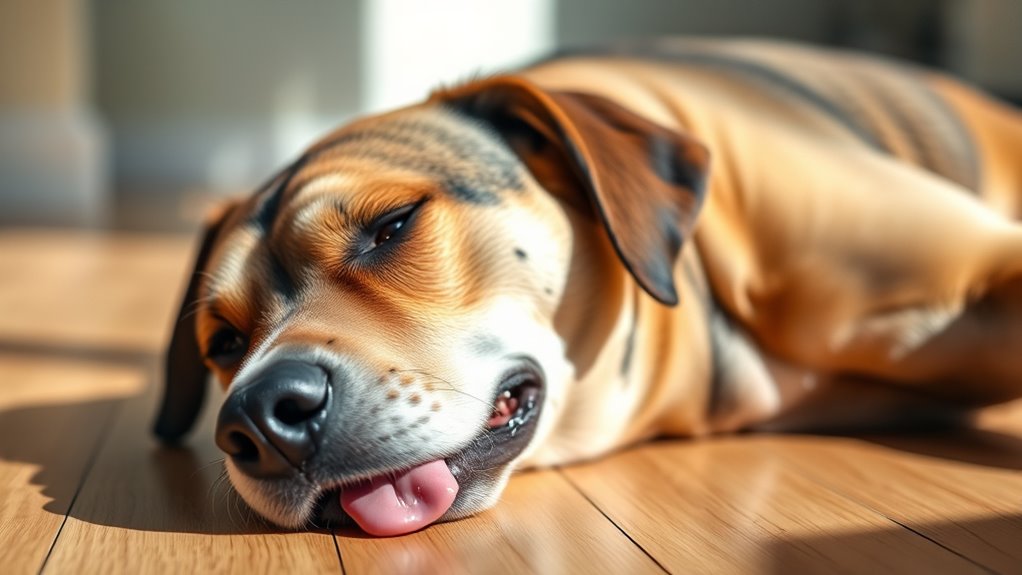
While panting is a normal way for dogs to cool down, you should pay attention if your dog’s breathing exceeds 40 breaths per minute while resting, as this is considered abnormal. A healthy dog at rest typically breathes between 15-35 times per minute, so monitoring your dog’s breathing rate can help you distinguish normal vs. abnormal panting.
Panting is a natural respiratory response that allows heat to dissipate through evaporation, but heavy panting when your dog is calm might signal health concerns. If you notice persistent or irregular panting, these are signs that something may be wrong.
It’s important to monitor your dog’s breathing closely and look for additional respiratory or behavioral changes. Consistently elevated breathing rates or unusual panting patterns should prompt a veterinary evaluation to rule out underlying health issues.
When to Worry About Panting While Resting and Contact Your Vet
If your dog keeps panting heavily while resting without any obvious reason, you should act quickly and consider contacting your vet. Persistent panting at rest can signal an underlying health concern that needs veterinary evaluation.
Heavy panting while resting may indicate serious health issues—seek veterinary advice promptly.
Especially if you notice abnormal symptoms like pale or blue gums, labored breathing, or signs of distress, these require immediate attention. Sudden or prolonged panting in brachycephalic breeds also calls for prompt veterinary consultation to rule out breathing problems.
Additionally, if panting while resting comes with reluctance to move, loss of appetite, or other abnormal behaviors, don’t wait to seek professional advice. These symptoms might indicate serious heart or respiratory issues.
Monitoring your dog closely and recognizing when panting isn’t normal helps protect their health. When in doubt, a veterinary evaluation can identify any underlying causes and ensure your dog gets the care they need before the situation worsens.
Frequently Asked Questions
What Are the First Signs of Heart Failure in Dogs?
You’ll notice persistent coughing, especially at night or after exercise. Increased resting breathing rate and lethargy are also common signs.
You might see pale or bluish gums, which is definitely something to watch out for. Sometimes, there’s possible swelling in the abdomen or chest.
All these could be early signs your dog might be facing heart failure. It’s important to keep an eye on these symptoms and check with your vet if you notice them.
What Is the 3-3-3 Rule for Dog Anxiety?
The 3-3-3 rule for dog anxiety means you watch your dog for signs during the first 3 minutes, 3 hours, and 3 days after stress.
This helps you spot worsening anxiety and know when to get help. It’s a simple way to keep an eye on how your dog is doing after something stressful.
How Long Is Too Long for a Dog to Be Panting?
If your dog’s panting lasts longer than 10-15 minutes at rest, it’s not just a new yoga breath technique.
You should get them checked to rule out overheating, anxiety, or health issues—don’t ignore it.
What Are the Signs That a Dog Is About to Pass Away?
You’ll notice your dog losing appetite, energy, and interest in activities. Breathing becomes irregular or labored, gums may change color, and they might be unresponsive or weak.
These signs often mean your dog is nearing the end. It’s tough to see, but recognizing these can help you prepare and provide comfort.
Conclusion
If your dog is panting while resting, it’s important to tell the difference between normal and unusual signs. While panting is often just your dog’s way of cooling off, persistent or heavy panting at rest can be a red flag waving for attention.
Don’t let it slide like a whisper in the wind—trust your gut and contact your vet if you notice worrying changes. Your furry friend’s health is worth every moment of care.
Remember, panting while resting isn’t always harmless. It can sometimes signal underlying health issues like pain, anxiety, or even heart and respiratory problems. So, keeping an eye on your dog’s resting panting is key to catching any problems early. If you’re ever unsure about your dog panting while resting, don’t hesitate to reach out to your vet for advice. Your dog’s well-being matters, and timely action can make all the difference.