
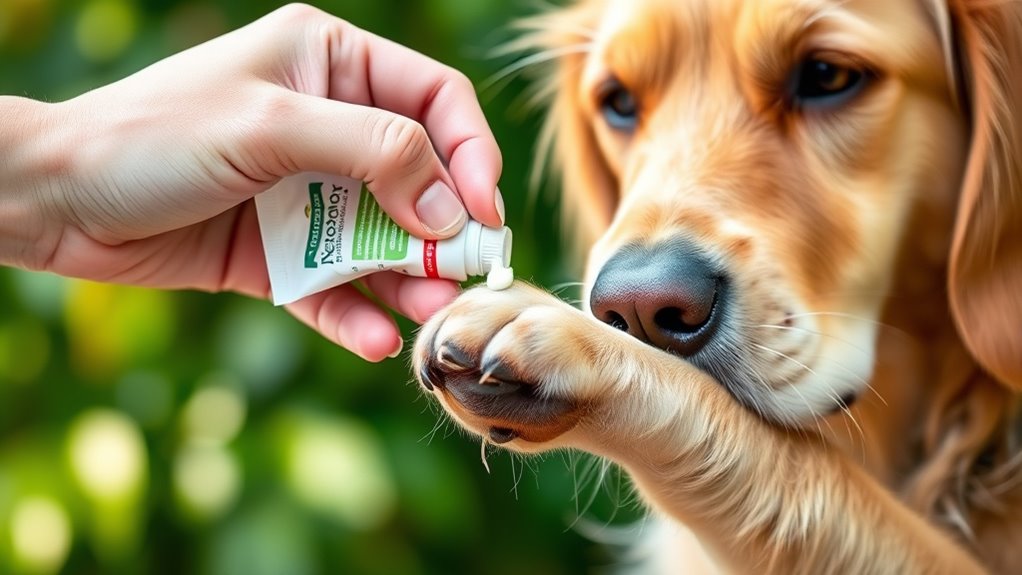
How Do I Safely Use Neosporin on My Dog?
You can safely use Neosporin on your dog by applying a thin layer only to clean, minor cuts or superficial wounds. It’s important to clean and dry the area first to prevent infection.
Using Neosporin properly helps promote healing and protects your dog’s skin from bacteria.
Make sure to keep your dog from licking the treated area by using a cone or bandage. This step is crucial because licking can remove the ointment and slow down the healing process.
Always watch closely for any signs of irritation or infection.
If you notice any allergic reactions, stop using Neosporin immediately. And if the wound worsens or doesn’t improve, contact your vet right away.
Keep reading to learn how to apply Neosporin properly and support your dog’s recovery.
Key Takeaways
- Clean the dog’s wound thoroughly with soap and water before applying Neosporin.
- Apply a thin layer of Neosporin only on minor, superficial wounds without infection signs.
- Use a clean cotton swab or fingertip to apply Neosporin, avoiding excess product.
- Prevent the dog from licking the wound by using an Elizabethan collar or breathable bandage.
- Monitor the wound for irritation or allergic reactions and consult a veterinarian if conditions worsen.
When to Use Neosporin on Your Dog?

When should you use Neosporin on your dog? You should apply Neosporin only on minor cuts and small, superficial wounds that don’t show signs of infection or deep tissue damage. It’s a topical antibiotic designed for infection prevention, but safe use starts with proper wound care.
Before applying Neosporin, clean the area gently with soap and water to remove dirt and bacteria. Always seek a veterinary consultation first to confirm that using a topical antibiotic is appropriate for your dog’s specific wound.
Avoid putting Neosporin near your dog’s eyes, ears, or mucous membranes, as these areas are sensitive. Watch closely for any signs of infection such as redness, swelling, or discharge, and stop using Neosporin immediately if your dog develops allergic reactions like itching or rash.
If that happens, or if the wound worsens, contact your vet promptly to make sure your dog heals safely and effectively. It’s always better to be cautious when it comes to your furry friend’s health.
How to Apply Neosporin Safely and Prevent Licking
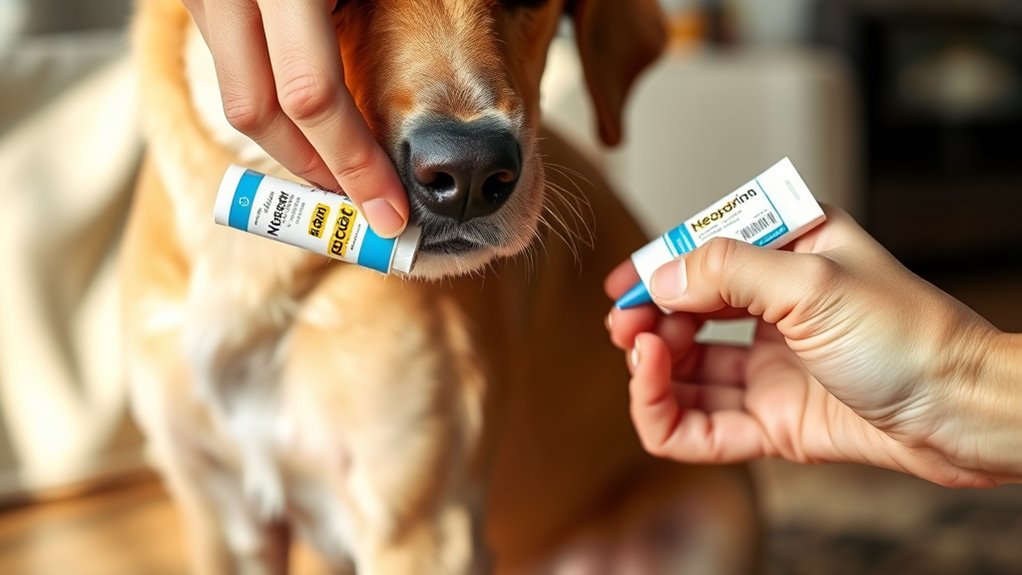
How exactly should you apply Neosporin to your dog’s wound to guarantee safety and effectiveness? Start by cleaning and drying the wound thoroughly. Then, apply a thin layer of Neosporin using a cotton swab or clean fingertip. This ensures the ointment reaches the affected area without excess product causing irritation.
To prevent your dog from licking the wound and disrupting recovery, use an Elizabethan collar or a soft recovery cone. If needed, cover the wound with a breathable bandage, but make sure it’s not too tight, so blood flow isn’t restricted. Check the bandage regularly for signs of dirt or moisture, and change it as necessary.
Keep an eye on your dog after applying Neosporin for any licking, irritation, or allergic reactions. Once the wound shows significant healing, you can remove the bandage and collar to avoid further irritation or infection. Following these steps keeps your dog safe and supports a smooth recovery.
Frequently Asked Questions
Can I Put Neosporin on an Open Wound on My Dog?
Yes, you can put Neosporin on small, superficial open wounds, but only after cleaning thoroughly. Don’t use it on deep wounds, and stop your dog from licking the area.
Always consult your vet first. It’s better to be safe and get professional advice before applying anything to your dog’s wound.
What Human Antibiotic Ointments Are Safe for Dogs?
Oh sure, just toss any human antibiotic on your dog—except Bacitracin and Polymyxin B, which vets generally approve.
But don’t get cocky; always check labels and ask your vet before playing pharmacist with your furry friend.
What Can I Use Instead of Neosporin for My Dog?
You can use pet-specific antibiotics like Mupirocin, antiseptics such as diluted povidone-iodine, or natural remedies like medical-grade honey.
Just make sure to check with your vet first to guarantee whatever you use is safe and effective for your dog.
It’s always better to be safe than sorry when it comes to your furry friend’s health!
Is Neosporin Safe if My Dog Licks It?
When Max licked his Neosporin, he got mild vomiting. Neosporin isn’t safe if your dog licks it too much.
You’ll want to use a cone or bandage to keep them from licking the wound. That way, you can help your dog heal safely without any tummy troubles.
Conclusion
Now that you know when and how to use Neosporin on your dog, you can confidently care for their wounds like a true 21st-century pet parent. Just remember to apply it gently and prevent your dog from licking the area.
Keep a close eye on the healing process to ensure everything is going smoothly. It’s not quite as simple as tossing a telegram, but with a little patience and care, you’ll help your furry friend recover safely and quickly.
Using Neosporin on your dog’s cuts and scrapes can be a safe and effective way to promote healing, but always follow proper guidelines. Be sure to monitor for any signs of irritation or allergic reaction, and consult your vet if the wound doesn’t improve.
By applying Neosporin carefully and discouraging licking, you’re giving your pet the best chance to heal without infection. Taking these precautions will keep your dog comfortable and happy as they recover from minor injuries.






3 Comments