
10 Tips to Keep Dog Off Couch
To keep your dog off the couch, start by setting clear no-couch rules early and stay consistent. Consistency is key when teaching your dog boundaries, so make sure everyone in the household follows the same rules. This helps your pup understand that the couch is off-limits.
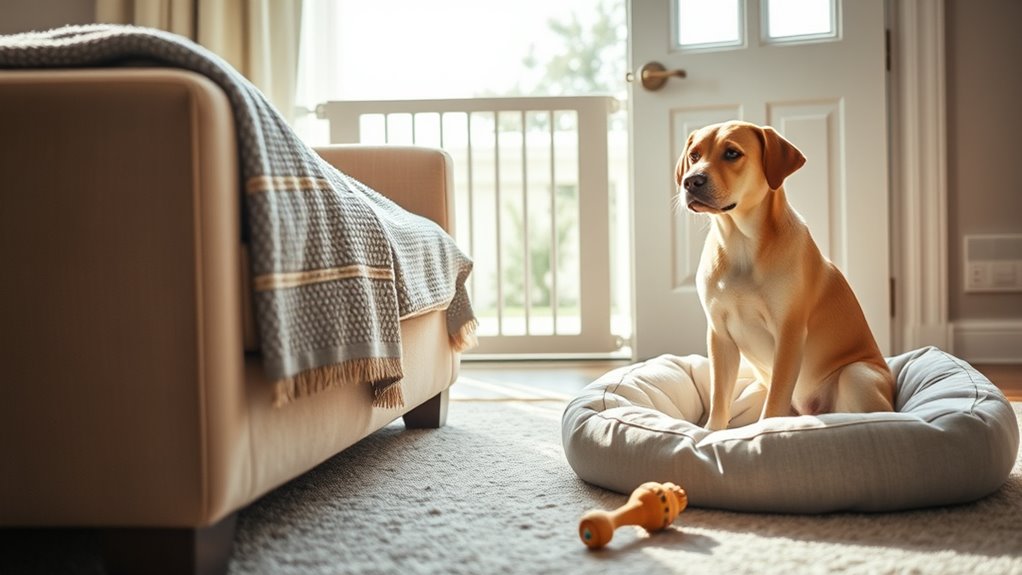
Create a cozy designated bed in popular spots and reward your dog for using it. Dogs love comfort, so giving them their own special place makes it easier for them to stay off the furniture. Plus, positive reinforcement like treats or praise encourages good behavior.
Remove pillows and blankets to reduce temptation, and try deterrents like aluminum foil or furniture barriers such as the Couch Defender. These simple tricks can make the couch less inviting without being harsh.
When you’re away, manage access with gates to keep your dog out of the room entirely.
Combining training with deterrents leads to lasting results. By exploring these steps further, you’ll build strong, lasting boundaries that keep your dog happy and your couch fur-free. It’s all about patience and consistency!
Key Takeaways
- Establish consistent “no couch” rules early to prevent your dog from developing jumping habits. It’s easier to set boundaries from the start.
- Provide a comfortable, well-placed dog bed and reward your dog for using it instead of the couch. Positive reinforcement really helps your pup understand what you want.
- Remove pillows, blankets, and soft items from the couch to reduce its appeal and tactile temptation. If it’s less cozy, your dog might be less interested.
- Use positive reinforcement and clear commands like “off” and “go to bed” to encourage staying off furniture. Keep your tone friendly but firm.
- Employ deterrents like aluminum foil or a Couch Defender barrier to discourage jumping on the couch. Sometimes a little harmless annoyance does the trick.
Understand Why Dogs Jump on Couches and What Motivates Them

Although it might seem like your dog jumps on the couch just to be naughty, they’re usually motivated by comfort, curiosity, or security. Understanding dog behavior helps you see why this happens.
If your dog was allowed on furniture as a puppy, they likely learned to associate couch time with cuddles and positive attention. The scent of familiar blankets or pillows also attracts them, making the couch a cozy resting spot.
Elevated positions satisfy your dog’s natural curiosity by giving them a better view of their surroundings. Additionally, dogs often seek out furniture to ease separation anxiety, finding comfort in the smells and security the couch provides.
Recognizing that your dog reacts to these environmental cues—not to be defiant—allows you to approach the issue with empathy and effective strategies. By grasping these motivations behind couch jumping, you can better address the behavior and create a more harmonious living space.
Set a Clear No-Couch Rule From the Start
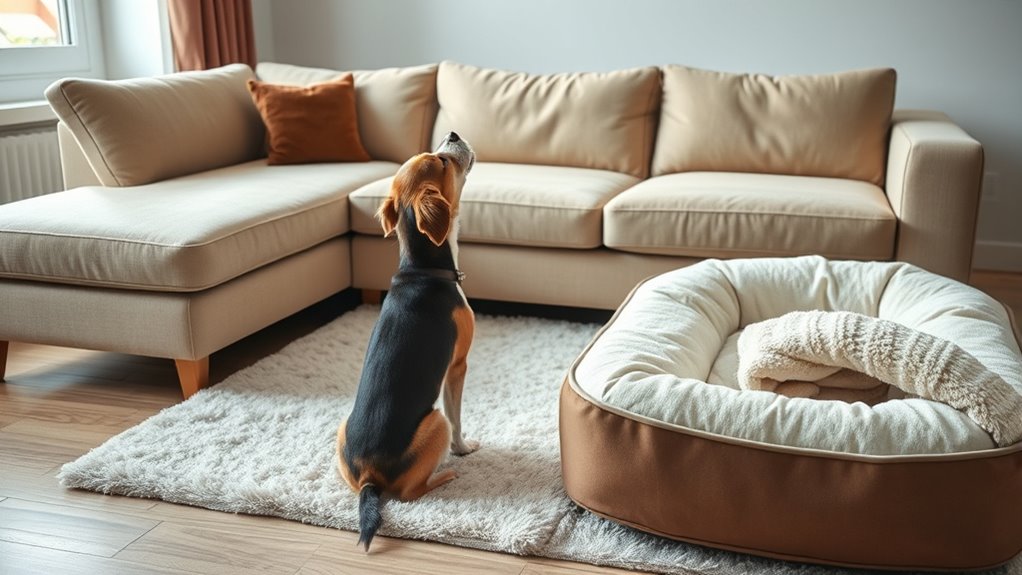
When you bring a new dog home, set clear boundaries about the couch right away. Consistent rules and early training help your dog understand that furniture is off-limits.
This way, you prevent habits that are tough to break later on. It’s much easier to start with clear limits than to fix problems down the road.
Consistent Boundaries Matter
If you want your dog to stay off the couch, you need to set a clear “no couch” rule as soon as you bring them home. Establishing consistent boundaries from the start helps your dog understand that the furniture is off-limits.
If you allow them on the couch sometimes but not others, they’ll get confused and test those boundaries. That usually leads to unwanted habits.
Consistent boundaries make it easier to manage your dog’s behavior because they know exactly what’s expected. Reinforce the rule every time your dog tries to hop up so it becomes second nature.
Early Training Benefits
Setting consistent boundaries naturally leads to the importance of starting early with training your dog to stay off the couch. Early training helps your dog understand from the start that furniture is off-limits, preventing the habit from forming later.
When you consistently enforce a no-couch rule during puppyhood, you reduce confusion and set clear boundaries. Puppies that never get on the couch are far less likely to develop the behavior as they grow.
Early training also makes managing your dog’s behavior easier and encourages long-term obedience. By introducing this rule early, you avoid the frustration of correcting unwanted habits later on.
Starting now means your dog learns good manners quickly, making your home more comfortable for everyone. It’s definitely worth the effort!
Create a Cozy, Designated Bed Your Dog Will Love
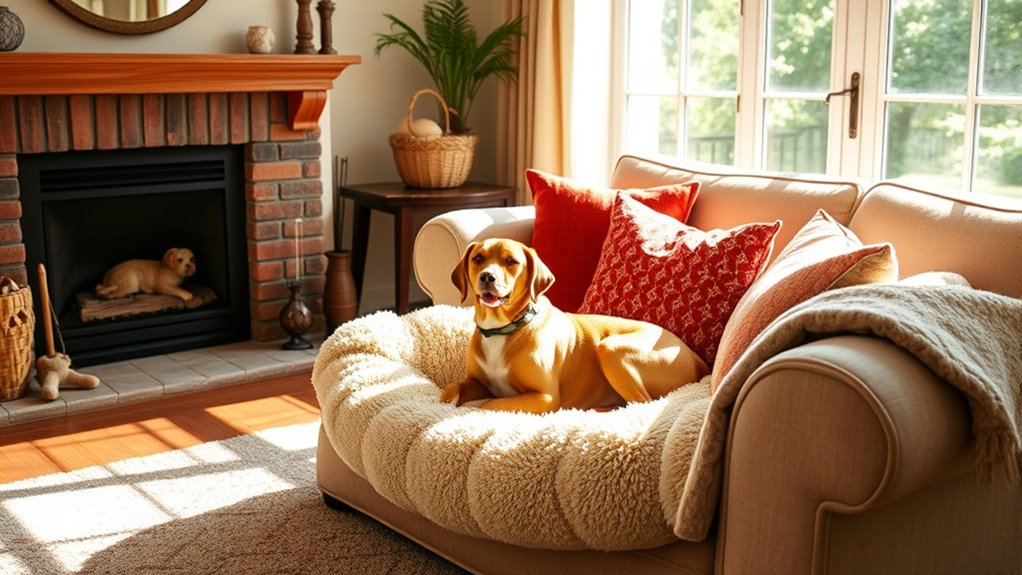
Although it might seem simple, providing your dog with a cozy, designated bed can markedly discourage them from jumping on the couch. Start by choosing dog beds that suit your pet’s size and preferences—foam-filled or orthopedic options work well for comfort and support.
Place the bed in a spot your dog frequents to make it a natural resting place. Use soft, inviting materials to increase its appeal.
Encourage your dog to use the bed by offering treats and praise whenever they settle there. Positive reinforcement helps establish the bed as their preferred space.
Don’t forget to keep the bed clean and fresh-smelling, as this makes it more attractive and comfortable over time. By creating a warm, welcoming bed tailored to your dog’s needs, you’ll make the couch less tempting and help your furry friend feel right at home in their own spot.
Remove Couch Temptations by Clearing Pillows and Blankets
Once you’ve created a cozy bed for your dog, the next step is to make the couch less inviting by removing pillows, blankets, and other soft items. These cozy accessories make the couch look and feel welcoming, encouraging your dog to jump up.
By clearing them, you reduce the visual and tactile temptations that keep your dog drawn to the furniture.
Here’s a quick guide to help you understand why removing these items works:
| Reason | Effect |
|---|---|
| Pillows and blankets present | Couch seems cozy and inviting |
| Soft items mask the surface | Less clear boundary for your dog |
| Clear couch surface | Less attractive to settle on |
| No soft temptations | Discourages jumping behavior |
| Consistent removal | Reinforces no-couch habit |
Use Positive Reinforcement to Reward Staying Off Furniture
When your dog stays off the furniture, reward them immediately with treats, praise, or toys to reinforce the behavior. Positive reinforcement helps your dog link staying on the floor or their bed with something enjoyable, making it a habit worth repeating.
Timing is key—reward right after they comply to strengthen this connection effectively. You can also use clicker training to mark the exact moment they choose the floor over the couch, making rewards more meaningful.
Try these positive reinforcement tips:
- Consistently reward your dog each time they stay off the furniture
- Use a clicker to precisely mark the desired behavior
- Offer high-value treats, enthusiastic praise, or favorite toys
- Keep rewards immediate to build a clear association
Teach Simple Cues Like “Off” and “Go to Bed
You can teach your dog simple cues like “off” to get them off the couch and “go to bed” to direct them to their spot. Using clear, consistent verbal signals paired with rewards makes these commands more effective.
Keep training sessions short and positive to help your dog learn quickly and reliably. This way, your dog stays motivated and the learning sticks better.
Effective Cue Training
Although training your dog to stay off the couch can be challenging, teaching simple cues like “off” and “go to bed” makes the process much easier. Effective cue training helps your dog understand what you expect and respond reliably.
You’ll want to use these tips: Reward your dog immediately when they step off the furniture to reinforce the “off” cue. Pair verbal commands with hand signals to strengthen communication.
Practice cues in different environments and with distractions to build consistency. Use positive reinforcement like treats or praise to keep training enjoyable and effective.
Reward-Based Commands
Since teaching your dog simple cues like “off” and “go to bed” creates clear boundaries, it’s essential to pair these commands with immediate rewards. Reward-based commands help your dog connect the behavior with positive outcomes, making it easier for them to follow instructions consistently.
Use treats or praise right after your dog obeys to reinforce good habits. Practice these cues regularly in different environments to build reliability.
| Command | Meaning |
|---|---|
| Off | Leave the furniture |
| Go to Bed | Move to designated resting spot |
| Reward | Treat or praise given immediately |
| Consistency | Regular practice in various locations |
| Positive Reinforcement | Encouragement to repeat behavior |
This method strengthens obedience and keeps your dog off the couch effectively. It’s a simple way to make sure good behavior sticks!
Consistent Verbal Signals
When you consistently use simple verbal signals like “off” and “go to bed,” your dog learns what behaviors you expect without confusion. Consistent verbal signals make training clearer and more effective, helping your dog respond reliably.
Keep your commands short and repeat them often to reinforce learning. Pairing these cues with treats or praise encourages your dog to obey even amid distractions.
- Use clear, concise signals to avoid confusing your dog.
- Repeat commands regularly to help your dog retain them.
- Reward your dog immediately after obeying the cue.
- Practice in different settings to strengthen response.
Try Fun Deterrents Like Aluminum Foil to Keep Dogs Off Couch
If you want to keep your dog off the couch without harsh training, try using aluminum foil as a fun deterrent. The shiny surface and crinkly texture of aluminum foil make the couch less appealing. Plus, the unexpected noise when your dog steps on it discourages them from jumping up again.
This simple dog deterrent uses common household items, making it an easy addition to your training routine. For added effect, place pots or lids alongside the foil to create both a visual and auditory barrier.
Just be sure to watch your dog’s reaction—if they seem scared or anxious, remove the foil to avoid stress. To keep your dog from getting used to the setup, regularly move or rearrange the foil.
This clever use of aluminum foil can help keep dogs off furniture by combining sensory deterrents with gentle training. It makes your couch a no-go zone without frustration.
Protect Your Furniture With Tools Like the Couch Defender
You can protect your furniture with tools like the Couch Defender, a slim barrier that keeps dogs off your couch. It’s easy to store since it fits neatly under or behind furniture when not in use.
Plus, its portable design works with different couch styles, making it a flexible solution for your home. It’s a simple way to keep your couch looking great without any hassle.
Couch Defender Features
Although keeping your dog off the couch can be challenging, tools like the Couch Defender make it easier by creating a discreet barrier that prevents access without causing discomfort.
The Couch Defender fits seamlessly into your training routine, protecting your furniture while being humane. Its slim design lets you store it easily under or behind furniture when not in use.
Plus, it adapts to various couch styles, including those with overstuffed arms.
Key features include:
- Compatibility with multiple furniture types by adjusting end panels and clips
- Versatile use on sectional sofas with multiple units
- Compact size for convenient storage in closets or baskets
- Humane, effective barrier that deters without distressing your dog
With the Couch Defender, you get a practical, unobtrusive way to keep your couch dog-free.
Storage And Portability
Because space can be limited, the Couch Defender’s slim, foldable design lets you store it easily under or behind furniture when it’s not protecting your couch. Its middle section features clips that secure the fold, making storage quick and hassle-free.
This thoughtful design enhances portability, so you can move it around your home without any trouble. Whether your couch has overstuffed arms or a unique shape, you can remove the end panels and use the compact middle section alone, boosting both storage options and portability.
When folded, it fits neatly in coat closets, baskets, or other discreet spots, reducing clutter. With the Couch Defender, you get effective protection combined with easy storage and portability, making it a practical tool to keep your dog off the couch.
Manage Your Dog’s Access When Away
When you’re not home, managing your dog’s access to the couch is essential to maintaining boundaries. You want to keep your furniture free from dog hair and guarantee your dog understands where to stay.
By managing your dog’s access when away, you can choose between a happy dog enjoying cuddling on a dog bed or a frustrated pup testing limits. Use these tips to train your dog effectively and maintain a happy home:
- Install gates or barriers to block the route to the couch when you’re out.
- Provide a comfortable dog bed with toys to keep your dog entertained and reduce the urge to jump on furniture.
- Apply safe deterrent sprays or temporary deterrents like foil or double-sided tape on the couch.
- Consistently reinforce dog training rules so your dog learns boundaries even when unsupervised.
At the end of the day, managing access and training your dog ensures a happy dog and a couch that stays fur-free.
Combine Deterrents and Training for Lasting Couch Boundaries
Managing your dog’s access to the couch while you’re away sets the stage for lasting boundaries, but combining deterrents with consistent training really locks in that behavior. Use deterrents like aluminum foil or PetSafe Scat Mats to make the couch less inviting, while pairing these with clear commands such as “off.”
This helps your dog connect the cue with staying off the furniture. Whenever your dog obeys, reinforce that good behavior with treats or praise to strengthen the boundary over time.
Be sure to adjust your deterrent methods and training techniques regularly to prevent your dog from getting used to them. This combination tackles both the immediate behavior and the underlying motivation, making the boundary more effective and durable.
Frequently Asked Questions
What Can I Do to Keep My Dog off My Couch?
You can train your dog by consistently saying “off” and rewarding them for obeying. Provide a comfy bed nearby, use treats, and make the couch less inviting with deterrents like foil.
Stay patient and consistent! It might take some time, but your dog will get the hang of it. Just keep encouraging them and don’t give up!
What Is the 7 7 7 Rule for Dogs?
Think of the 7-7-7 rule as your dog’s life milestones—at 7 weeks, 7 months, and 7 years.
You’ll notice growth shifts, so you can adjust training and care to match their evolving needs perfectly.
What Smell Will Keep a Dog off the Couch?
You’ll find that citrus scents like lemon or orange, vinegar, and peppermint oil keep your dog off the couch. These smells are unpleasant to dogs, so applying them regularly helps reinforce boundaries effectively and naturally.
It’s a simple trick that works pretty well! Just remember to reapply the scents often, so your dog gets the message loud and clear.
What Is the 3-3-3 Rule With Dogs?
Imagine your puppy as a traveler exploring new lands— the 3-3-3 rule guides you to introduce them to three people, places, and experiences over three weeks, building confidence and preventing fear during their critical early months.
It’s all about taking things step by step.
You want to make sure your pup feels safe while discovering the world around them.
Conclusion
You might worry that keeping your dog off the couch will make them feel left out, but it actually helps them feel more secure in their own space.
By setting clear boundaries and offering a cozy bed, you’re giving your dog a safe spot they’ll love just as much.
With consistent training and a few simple tools, you’ll protect your furniture and enjoy a happier, more comfortable home for both of you.
Keeping your dog off the couch isn’t just about saving your furniture—it’s about creating a better environment for your furry friend. When your dog has their own comfy bed, they feel more relaxed and less anxious. Plus, setting boundaries helps your dog understand what’s expected, making training easier and your home more peaceful. So, with patience and these 10 tips to keep your dog off the couch, you’ll build a stronger bond and create a space where everyone feels happy and comfortable.





4 Comments