
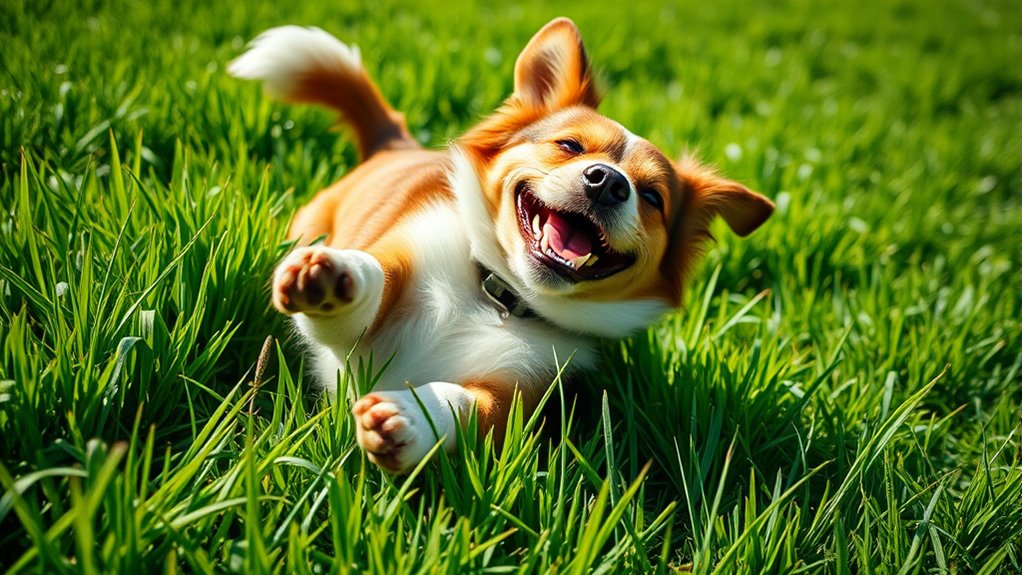
Why Does My Dog Roll in Grass?
Your dog rolls in grass because it taps into natural instincts from wild ancestors, like masking scent to avoid predators or mark territory. This behavior is deeply rooted in their survival tactics and helps them communicate presence through scent.
Plus, rolling in grass feels great! Your dog enjoys the cool, soothing texture that can relieve itchiness or simply provide sensory pleasure. It’s a mix of instinct and comfort that makes this behavior so common.
If you want to understand why dogs roll in grass and how to keep this habit safe and healthy, there’s plenty more to explore. Managing this behavior properly can help ensure your furry friend stays happy and protected.
Key Takeaways
- Dogs roll in grass to mask their scent. This is an instinct they inherited from wild ancestors for survival and hunting.
- Rolling also spreads their own scent. It’s a way to mark territory and let other dogs know they’re around.
- The texture and coolness of grass feel good too. It can provide sensory pleasure and help relieve itching or irritation.
- Positive reinforcement and a safe environment can help manage this behavior. That way, rolling stays fun and safe for your dog.
- But if your dog rolls excessively, it might be a sign of health issues. Skin problems or allergies could be the cause, so a vet check is a good idea.
Why Dogs Roll in Grass: Instincts and Enjoyment Explained

Although it might seem like a simple, playful act, your dog rolling in grass taps into deep instincts inherited from their wild ancestors. This instinctual behavior helped wild dogs mask their scent to avoid predators or sneak up on prey.
When your dog rolls in grass, they’re not just having fun—they’re naturally engaging in scent-marking, spreading their own unique scent to communicate and mark territory. Beyond this survival tactic, rolling in grass offers sensory pleasure.
The texture and coolness provide relief, especially if your dog wants to scratch an itch or simply enjoy a soothing sensation. This natural behavior combines instinct with enjoyment, showing how dogs connect with their environment.
How to Manage Your Dog’s Grass Rolling Behavior Safely

When your dog starts rolling in grass more than you’d like, you can gently redirect their attention to toys or commands to prevent unwanted behavior. Using positive reinforcement training, reward your dog with treats or praise when they engage in appropriate activities instead of rolling.
To manage your dog’s behavior safely, keep your dog on a leash or in a designated area to limit access to grassy spots where rolling is frequent. Regularly bathe and groom your dog to reduce odors or skin irritations that might trigger this behavior.
Behavior management also means being mindful of safety concerns, such as ticks or pesticides in the grass. If your dog’s rolling seems excessive or linked to discomfort, consult a veterinarian to rule out allergies or infections.
Frequently Asked Questions
Are Dogs Happy When They Roll in the Grass?
Yes, your dog’s happy when they roll in the grass. You’ll see wagging tails and playful energy because they enjoy the sensation and feel safe.
It’s their way of showing joy and contentment around you. They’re basically saying, “This is fun and I’m comfortable here!”
Should I Stop My Dog From Rolling in Grass?
You shouldn’t stop your dog from rolling in grass unless it’s harmful or excessive.
If your dog rolls in dangerous substances or shows skin issues, redirect them and consult a vet.
Use positive reinforcement to guide their behavior. It’s all about keeping them safe while letting them have fun!
What Are the Signs of an Unhappy Dog?
Don’t beat around the bush—if your dog suddenly avoids play, barks excessively, licks or scratches nonstop, or changes eating and sleeping habits, you’re seeing signs they’re unhappy.
They need your attention and care. It’s important to catch these signals early so you can help your furry friend feel better.
What Fruit Can’t Dogs Eat?
You shouldn’t feed your dog grapes, raisins, citrus fruits, or avocado. Avoid fruits with pits like cherries and peaches, too.
Too much sugary fruit like bananas can lead to obesity or diabetes, so be careful with portions. It’s always best to check before giving your dog any new fruit.
Conclusion
So, next time your dog rolls in the grass, remember it’s more than just play—it’s their way of connecting with nature and following ancient instincts. While it might seem messy, it’s a harmless quirk that brings them joy and comfort.
Just keep an eye out for ticks or allergens, and you’ll both enjoy the green carpet without worries. Let your dog’s grass-rolling be their little dance with the earth.
Rolling in the grass is a natural behavior that helps dogs explore scents and express happiness. It’s one of those simple, instinctive actions that shows how much dogs love being outdoors. So, embrace this fun habit—it’s part of what makes your dog unique and connected to the world around them.






One Comment