
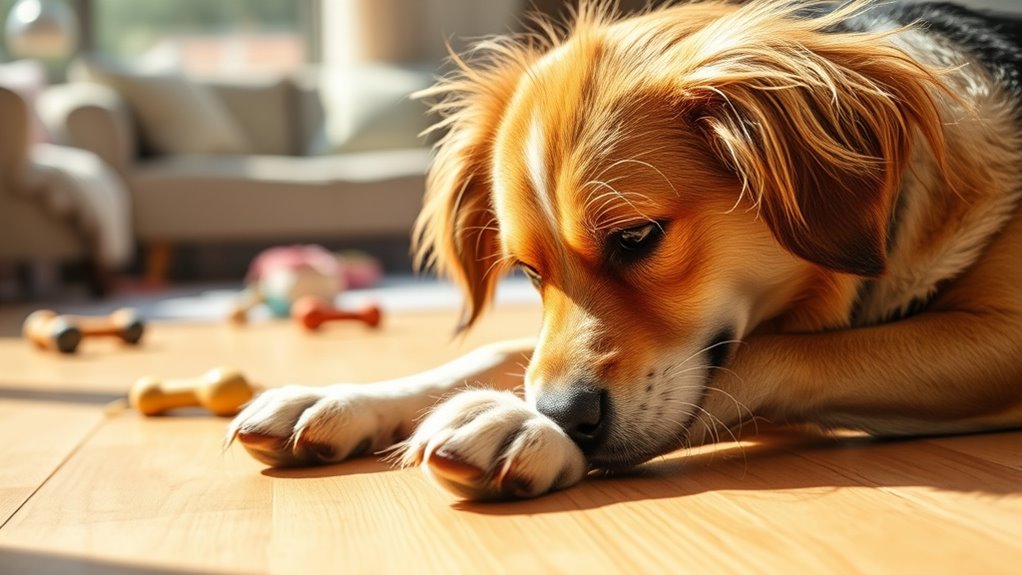
Why Is My Dog Chewing His Paws?
If your dog is chewing their paws, they’re likely trying to relieve discomfort caused by allergies, parasites, injuries, or stress. Paw chewing is a common behavior in dogs that can sometimes signal a bigger problem. Occasional licking is normal, but when your dog keeps chewing or biting their paws intensely, it’s usually a sign something’s wrong.
Persistent chewing often points to irritated skin, pain, or anxiety. You’ll want to watch closely for redness, visible damage, or any changes in your dog’s behavior. These signs can suggest that medical attention might be needed.
Understanding why your dog is chewing their paws can help you take the right steps to soothe them and prevent any further problems. It’s all about keeping your furry friend comfortable and happy!
Key Takeaways
- Dogs chew paws because of allergies that make their skin itchy. These allergies can come from food or things in the environment, like pollen.
- Parasites like fleas or mites can also irritate their skin. That irritation often leads to paw chewing.
- Sometimes, injuries or cracked paw pads cause pain. When that happens, dogs lick or chew their paws to feel better.
- Anxiety and stress can make dogs chew their paws too. It’s a way for them to soothe themselves when they’re feeling uneasy.
- If your dog keeps chewing their paws a lot or seems really focused on it, it might mean there’s a medical problem. It’s a good idea to get your vet to check it out.
Why Does My Dog Chew Their Paws?

Although it’s normal for dogs to occasionally chew their paws to remove irritants or debris, you should pay attention if the behavior becomes excessive. When your dog frequently licks or chews their paw, it might signal underlying issues like allergies or parasites.
Occasional paw chewing is normal, but excessive licking may indicate allergies or parasites requiring your attention.
Allergies, whether from food or environmental factors such as pollen, can cause itching and discomfort, prompting your dog to chew in response. Parasites like fleas and mites also irritate the skin, leading to persistent paw chewing.
Injuries, cuts, or cracked paw pads can cause pain, so your dog chews to soothe that discomfort. Anxiety and stress might also trigger paw chewing as a self-soothing behavior.
If your dog’s paw licking and chewing seem compulsive or intense, it’s important to *evaluate* these causes. Understanding why your dog chews their paws helps you recognize when something more serious is going on and when to seek veterinary advice.
How to Stop Your Dog From Chewing Their Paws?

If your dog keeps chewing their paws, you can take several steps to help stop this behavior and ease their discomfort. Start with regular paw inspection and gentle cleaning to remove allergens and irritants that cause itchy paws.
Excessive licking often makes irritation worse, so consider home remedies like oatmeal baths or hypoallergenic wipes to soothe dry skin. Also, increasing your dog’s mental and physical stimulation through exercise and interactive toys can help reduce boredom-driven chewing.
Protective booties or Elizabethan collars can prevent further damage while your dog heals. But most importantly, you should consult your veterinarian to identify and treat underlying medical issues like allergies, parasites, or pain.
Veterinary care ensures targeted treatment that addresses the root cause, not just the symptoms. By combining these approaches, you’ll effectively manage your dog’s paw chewing and keep your furry friend comfortable and healthy.
Frequently Asked Questions
What to Do if My Dog Is Chewing His Paws?
If your dog’s chewing his paws, regularly clean and inspect them. Use soothing moisturizers to keep the skin healthy.
Also, provide mental stimulation to keep him occupied. You can try toys or games that distract him from licking.
To prevent licking, consider using booties or collars. And if the behavior sticks around or gets worse, it’s a good idea to check in with your vet.
They can help treat any underlying issues causing the chewing.
What Can I Give My Dog for Itching and Licking Paws?
Did you know 10% of dogs suffer from allergies? You can give your dog medicated shampoos or topical treatments like Lavengel®.
Vet-approved antihistamines also help a lot. Plus, oatmeal baths and omega-3 supplements can ease itching and licking comfortably.
These options work well together to keep your pup feeling better. Just make sure to check with your vet before starting anything new!
What Parasites Cause Paw Chewing?
You’ll find fleas, ticks, and mites cause paw chewing by irritating your dog’s skin. Mange mites burrow in, fleas leave dirt, and ticks bite, all making your dog itch and chew.
It’s pretty uncomfortable for your pup, so they try to relieve the itch by chewing their paws. Prevent this by using proper treatments to keep those pests away.
When Should I Be Concerned About My Dog Licking Their Paws?
You should be concerned if your dog’s paw licking lasts more than a few days or gets worse.
Also, watch out for redness, swelling, sores, a foul odor, or pain.
If your dog starts limping or has trouble walking, that’s a sign to see a vet.
Don’t wait too long—getting checked out early can help your pup feel better faster!
Conclusion
If your dog’s paw-chewing turns into a non-stop, paw-munching frenzy, it might feel like they’re trying to chomp through their entire body! Don’t let it get that wild—paw chewing can signal allergies, boredom, or stress.
By spotting the cause early and giving your dog some extra love, exercise, or vet care, you can stop the madness before your furry friend turns into a four-legged woodchipper. Keep those paws happy and chew-free!
Paw chewing is often a sign your dog is uncomfortable or anxious. It’s important to pay attention to these behaviors because untreated paw chewing can lead to infections or sores. Whether it’s due to allergies, boredom, or stress, addressing the root cause will help your dog feel more comfortable.
So, if you notice your dog obsessively chewing their paws, don’t wait. Provide more mental stimulation, regular exercise, and consider a vet visit for allergies or other health issues. Taking these steps can keep your dog’s paws healthy and happy, stopping paw chewing before it becomes a serious problem.



2 Comments