

Why Is My Dog Foaming at the Mouth?
Your dog foaming at the mouth can be harmless and often happens because of excitement or overexertion. Sometimes, it’s just part of normal behaviors like teething.
Certain breeds might naturally have a foamy look, especially if they experience mild oral irritation. So, not all foaming means something bad is going on.
However, if your dog’s foaming comes with symptoms like difficulty breathing, vomiting, or changes in behavior, this could signal a serious problem.
In cases where the foaming is sudden, persistent, or your dog seems distressed, it’s important to get veterinary help right away.
Keep reading to learn when foaming is just a simple quirk and when it might be a sign of something more serious.
Key Takeaways
- Foaming at the mouth can happen because of excitement, overexertion, or teething. These causes are usually harmless and temporary.
- Sometimes, certain breed traits or mild oral irritations might naturally make your dog look foamy without any real health concerns.
- But if the foaming lasts a long time, especially if your dog is vomiting, swelling, or acting differently, it could mean poisoning or a serious illness.
- If your dog has trouble breathing, has seizures, or collapses along with foaming, you need to get emergency veterinary care right away.
- So, if the foaming comes on suddenly, doesn’t go away, or your dog seems distressed, don’t wait. Get prompt veterinary help to rule out serious problems.
Dog Foaming at the Mouth: Benign and Serious Causes

While foaming at the mouth can alarm you, it often results from harmless causes like excitement, overexertion, or teething. Dog foaming due to these benign causes usually clears up quickly and doesn’t require veterinary care.
Excessive salivation from breed characteristics, such as in jowly dogs like Bloodhounds, can also create a foamy appearance without indicating health issues. Mild oral irritations or minor mouth trauma may trigger temporary foaming, but these usually resolve with simple home care.
However, you should stay alert for serious causes. If foaming accompanies other symptoms, it could signal underlying health issues needing prompt veterinary care.
Differentiating between benign and serious causes helps you respond appropriately. Understanding that not all dog foaming signals emergencies will ease your worries, but knowing when to seek help remains essential for your pet’s well-being.
When to Take Your Dog to the Vet for Foaming at the Mouth
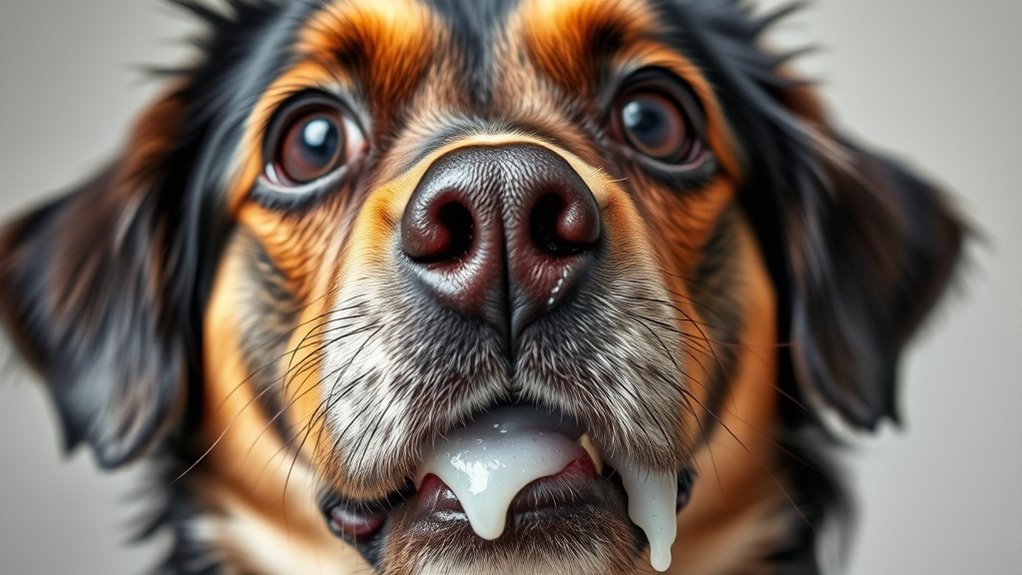
Recognizing when your dog’s foaming at the mouth signals a serious problem can make all the difference in their health outcome. You should seek veterinary care urgently if foaming comes with difficulty breathing, seizures, collapse, or sudden onset without clear cause.
Persistent or worsening foaming, especially linked to poisoning or trauma, also demands prompt attention. Watch for additional symptoms like vomiting, oral pain, swelling, or behavior changes.
If your dog shows distress, unresponsiveness, or potential rabies exposure, don’t hesitate to get emergency help.
| Symptom/Sign | Urgency Level | Action Required |
|---|---|---|
| Difficulty breathing | Urgent | Immediate veterinary care |
| Sudden foaming | High | Prompt vet consultation |
| Persistent foaming | Urgent | Emergency veterinary care |
| Behavior changes | Moderate | Vet evaluation recommended |
| Suspected rabies | Critical | Immediate emergency response |
Frequently Asked Questions
Should I Be Worried if My Dog Is Foaming at the Mouth?
Yes, you should be worried if your dog’s foaming is sudden or persistent.
Also, if it comes with other symptoms, don’t ignore it.
Get your dog checked by a vet immediately. It’s important to rule out serious or life-threatening issues.
How to Cure Dog Foaming?
You’ll need to take your dog to the vet promptly for diagnosis. They’ll figure out what’s causing the foaming, whether it’s toxins, infections, or seizures.
Then, they’ll treat it using medications, decontamination, or surgery. This way, your dog can recover safely and effectively.
What Causes Foamy Saliva?
Foamy saliva happens when your dog produces excess saliva mixed with rapid panting or breathing.
Medications, toxins, oral injuries, heatstroke, or stress can trigger hypersalivation, causing that foamy, bubbly saliva you notice.
It’s kind of like when we get nervous or overheated—dogs can react in similar ways. So, if you see your pup with foamy saliva, it’s good to check what might be causing it.
Conclusion
If your dog’s mouth looks like a bubbling brook, don’t panic right away—sometimes it’s just a harmless quirk, like a playful splash. But if the foaming comes with other signs, it could be a call for urgent help, like a lighthouse guiding you through fog.
Trust your instincts and get your furry friend to the vet when in doubt. After all, heroes always answer the call to protect those they love.
Foaming at the mouth in dogs can happen for many reasons. It might be something minor like excitement or anxiety, or it could signal more serious issues like poisoning, seizures, or dental problems.
If you notice your dog foaming at the mouth along with vomiting, lethargy, or unusual behavior, it’s important to seek veterinary care immediately. Early intervention can make all the difference in your dog’s health.
Remember, if your dog is foaming at the mouth, don’t ignore it. Keep an eye out for other symptoms and contact your vet to ensure your pet stays safe and healthy.