
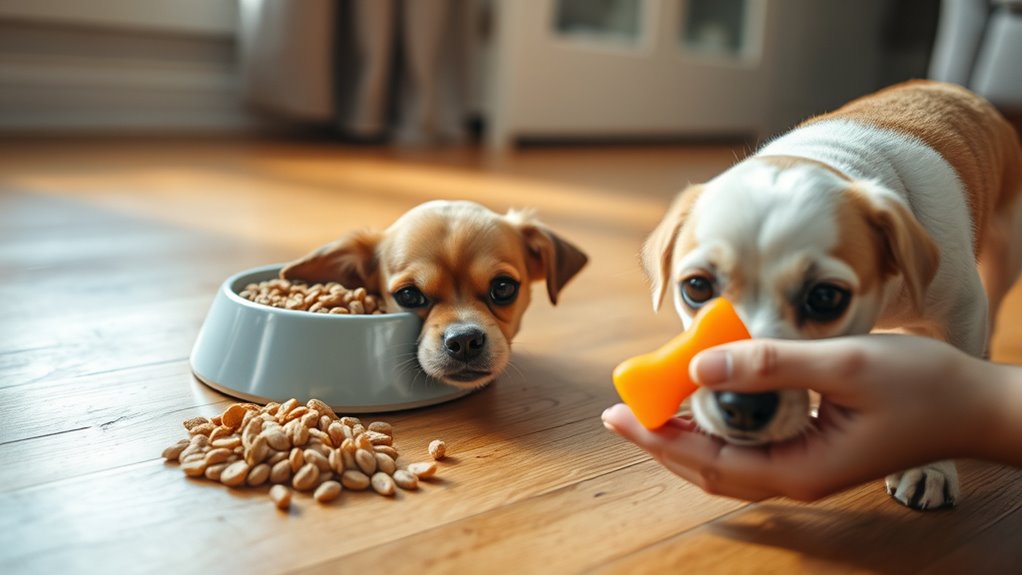
Why Is My Dog Not Eating His Food but Will Eat Treats?
If your dog isn’t eating his food but will eat treats, it can be puzzling and a bit frustrating. This common issue might be due to health problems like dental pain or digestive discomfort, which can make regular kibble less appealing. Treats usually smell and taste better, so your dog might naturally prefer them over their usual meals.
Sometimes, behavioral habits play a role too. If your dog has learned that treats are more exciting, they might hold out for those instead of eating their food.
Stress and distractions in the environment can also make your dog less interested in mealtime.
Don’t worry—you can try simple routines and food tweaks to help. There are plenty of proven strategies to encourage your dog to enjoy their regular meals again. Give them a shot, and you might see your dog happily eating his food in no time!
Key Takeaways
- Medical issues like digestive upset or dental pain can cause dogs to refuse food but still eat flavorful treats. Sometimes, it’s just that the treats are easier or less painful to eat.
- Dogs may develop behavioral preferences for treats over regular meals because they get rewarded with them often. It’s like they start thinking treats are way better than their usual food.
- Stress or distractions in the environment can reduce a dog’s interest in their regular food. If there’s too much going on, they might just ignore their bowl.
- Treats usually taste and smell better, which makes them way more appealing than kibble. So, it’s no surprise they prefer those tasty bites.
- Keeping a consistent feeding routine and limiting treats during mealtime really helps encourage dogs to eat their regular food. It’s all about setting good habits!
Why Dogs Eat Treats But Refuse Their Food: Medical and Behavioral Causes
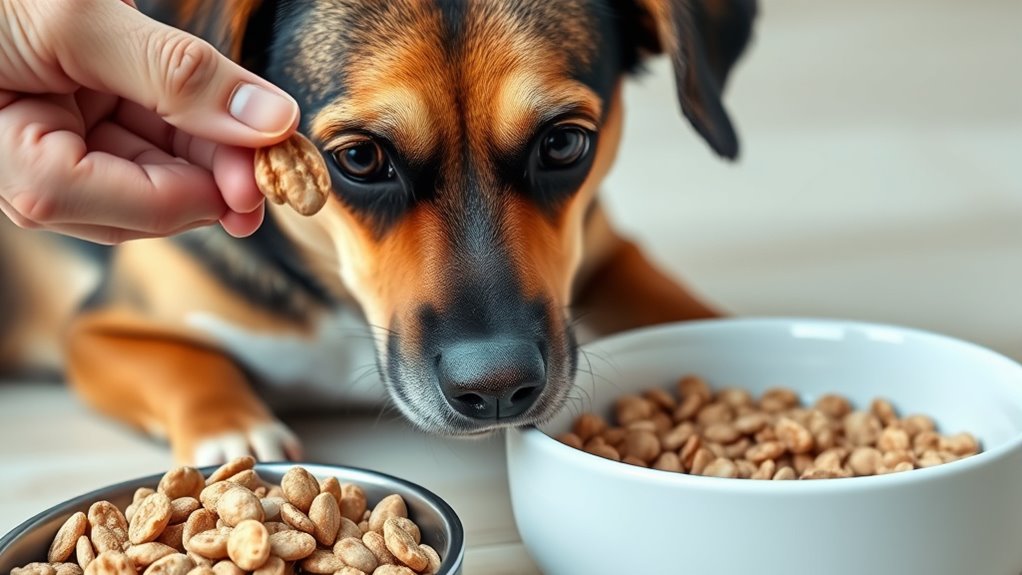
Although it can be frustrating, your dog’s preference for treats over regular food often comes down to medical or behavioral reasons. Appetite loss from underlying health issues like digestive upset can cause food refusal, while treats remain appealing due to their rich flavor and aroma.
Dental discomfort may also make chewing regular kibble painful, so your dog opts for softer treats instead. Behavioral reinforcement plays a big role, too—if you regularly reward good behavior with treats, your dog may develop food preferences that favor these tasty rewards over meals.
Additionally, household stress or distractions can affect your dog’s eating habits, making them a picky eater who resists their usual food but ardently accepts treats. Understanding these factors can help you pinpoint why your dog rejects their food yet still enjoys treats, highlighting the balance between medical causes and learned behaviors behind their selective eating.
How to Get Your Dog to Eat Their Food Again: Simple Tips That Work
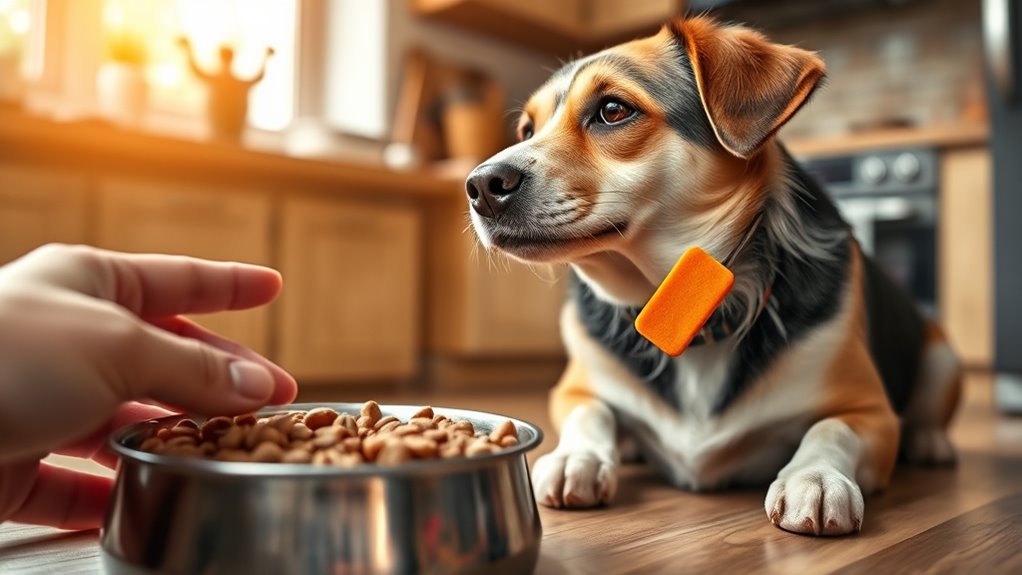
When your dog refuses their regular food but enthusiastically accepts treats, you can encourage better eating habits by establishing a consistent feeding routine and making mealtime more appealing. First, set specific feeding times and remove uneaten food after 15-20 minutes to help your dog develop regular eating habits.
To combat food boredom, try warming their food slightly, mixing wet and dry options, or adding savory toppers. These little changes can make a big difference in getting your dog interested in their meals again.
Warming food or adding tasty toppers can spark your dog’s appetite and make meals more exciting.
Be mindful of food sensitivities or allergies that might cause appetite loss, and consult your vet if you notice any signs of illness or a change in your dog’s eating habits. It’s always better to be safe and get professional advice when something feels off.
Avoid giving too many treats—limit them to 10% of daily calories and keep treats away from mealtime to make eating regular food more attractive. Also, create a calm feeding environment with minimal distractions so your dog can focus on their food without stress.
If you need to shift foods, do it gradually over 7-10 days to encourage them to eat without upsetting their stomach. This slow transition helps your dog adjust and keeps mealtime pleasant for both of you.
Frequently Asked Questions
What to Give a Dog Who Is Refusing to Eat?
You should offer warm, aromatic wet food or add tasty toppers to dry kibble. Try small, frequent meals and high-value treats like cooked chicken.
Keep feeding time calm, and consult your vet if refusal continues. Sometimes a little patience and a change in routine can make a big difference!
Will a Dog Eventually Eat if Hungry?
Yes, your dog will usually eat if hungry, but if he refuses for over 24-48 hours, check for health issues.
Hunger eventually outweighs food aversion, so stay patient and monitor his behavior closely.
Do Dogs Suddenly Dislike Their Food?
Absolutely, dogs can suddenly despise their food like it’s the worst thing ever! You’ll notice they turn their nose up instantly.
This often happens because of health issues, stress, or boredom—so don’t ignore these sudden changes.
How Do I Get My Dog to Eat Dog Food Again?
You can get your dog to eat dog food again by mixing in small amounts of treats or wet food. Warming it slightly can also help make it more appealing.
Try sticking to a consistent feeding schedule. Also, limit treat intake to encourage interest in regular meals.
It’s all about making the food more tempting and keeping things routine. Your dog will likely get back to enjoying their regular dog food in no time!
Conclusion
If your dog’s food feels like yesterday’s news but treats spark joy like a new adventure, it’s time to dig deeper. Sometimes, picky eating masks health or behavior puzzles waiting to be solved.
By tuning into your furry friend’s needs and mixing up mealtime magic, you’ll turn their nose back to dinner bowls. Remember, patience and love are your secret ingredients—soon, mealtime will be a feast, not a fight.
If your dog is not eating his food but will eat treats, it might be a sign to check for underlying health issues or changes in behavior. Adjusting the feeding routine, trying different flavors, or consulting your vet can help address picky eating. With care and attention, you can encourage your dog to enjoy his meals again and maintain a healthy diet.


One Comment