Why Is My Dog So Clingy?
Your dog’s clinginess often signals emotional needs or potential health issues like separation anxiety, aging, or sensory decline. They might also be sensing your own stress or physical struggles.
Understanding why your dog is so clingy can help you address these feelings and create a stronger bond.
Ignoring this behavior could mean missing important signs that require care or veterinary attention. So, it’s important to pay close attention and respond with patience and compassion.
Keep an eye out for any changes in their behavior or health.
By understanding these reasons and how to support your dog’s independence, you can improve both their comfort and your relationship. It’s all about finding the right balance between giving them love and encouraging confidence.
Key Takeaways
- Clinginess can signal separation anxiety or emotional distress needing attention.
- Sudden clingy behavior may indicate health issues or sensory decline in your dog.
- Aging dogs often seek more comfort and reassurance from their owners.
- Changes in routine or environment can increase a dog’s need for closeness.
- Dogs may sense and respond to their owner’s emotional or physical health struggles.
Why Is My Dog So Clingy?

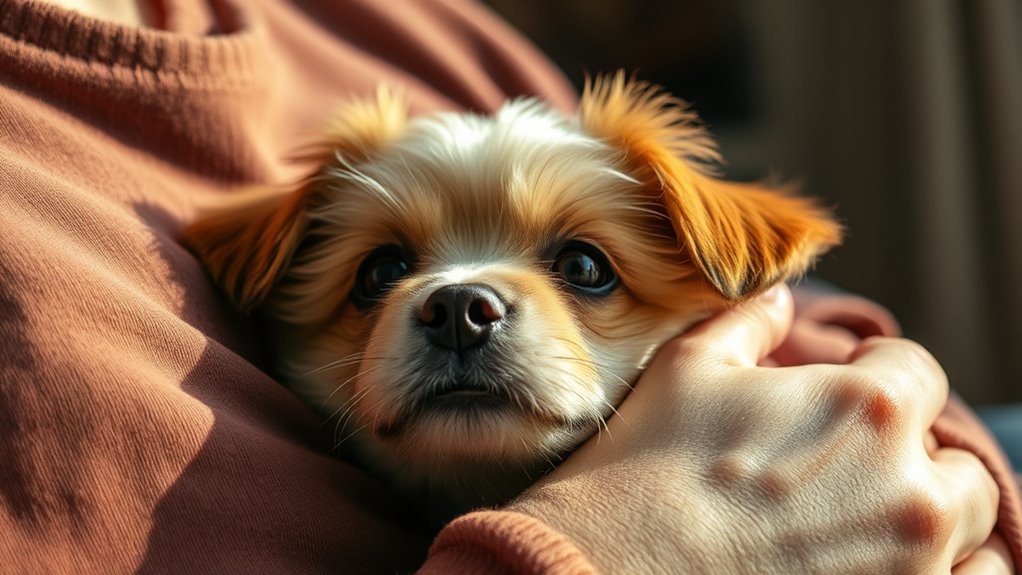
If your dog has suddenly become clingy, it might be trying to tell you something significant. This clingy behavior often signals underlying issues related to health or emotional distress.
Dogs can develop separation anxiety or show signs of aging that make them seek more comfort and reassurance. You might notice your dog following you closely or wanting to stay on the bed more than usual.
These changes in behavior could indicate sensory decline or mental stimulation needs that aren’t being met. Sometimes, a dog’s clingy nature reflects their awareness of your own emotional or physical health struggles, offering silent support.
It’s vital not to ignore these signs, as they may suggest the need for medical attention. Consulting a veterinarian can help rule out illnesses or psychological causes, ensuring your dog gets the care and comfort they deserve.
Recognizing the reasons behind your dog’s clingy behavior helps you respond appropriately and compassionately. So, keep an eye on them and don’t hesitate to seek help when needed.
How to Help Your Clingy Dog Be More Independent

Although your dog’s clinginess can be challenging, you can help them become more independent by gradually encouraging calm behavior when they stay in a designated safe space. Use positive reinforcement like treats and praise to reward your clingy dog for relaxed moments alone.
Encourage calm, independent behavior in your dog with positive reinforcement in a safe, designated space.
Establish a consistent routine that includes scheduled alone time to reduce anxiety and help them develop separation skills. Incorporate mental stimulation through puzzle toys and training exercises to build confidence and distract your dog from clingy tendencies.
Practice desensitization by slowly increasing your absences, pairing departures with calming activities to normalize separations and reshape dog behavior. This approach helps your dog learn to be independent without feeling abandoned.
Over time, these steps will foster your dog’s independence and reduce clinginess, making both of you more comfortable with alone time.
Frequently Asked Questions
How Do I Get My Dog to Stop Being so Clingy?
You can get your dog to stop being clingy by gradually encouraging independence and rewarding calm behavior.
Make sure your dog gets plenty of exercise—it really helps burn off extra energy. Sticking to a routine also gives them a sense of security.
Try ignoring attention-seeking behaviors when you can. And don’t hesitate to use calming aids like puzzle toys or soothing music to keep them relaxed.
What Breed of Dog Is the Most Clingy?
You’ll find lapdog breeds like Shih Tzus, Pomeranians, and Maltese are the most clingy. They crave constant attention and affection, making them perfect companions if you want a dog that sticks by your side nonstop.
These little guys just love being close to you. Honestly, if you like having a furry shadow, they’re the way to go!
Is It OK to Ignore a Clingy Dog?
Yes, you can ignore a clingy dog, but do it gradually and carefully. Reward calm, independent behavior instead.
Always rule out health or anxiety issues first by consulting a vet or behaviorist to keep your dog secure. It’s important to make sure nothing else is causing the clinginess.
Can Your Dog Be Too Attached to You?
You can have too much of a good thing when your dog’s attachment turns into clinginess.
If they can’t stand being alone, it’s time to set boundaries and teach independence for their well-being and yours.
Conclusion
If your dog seems clingy, remember you’re not alone—studies show that about 60% of dogs display some level of separation anxiety. Helping your furry friend become more independent takes patience and consistent training.
By gradually encouraging solo play and rewarding calm behavior, you’ll build their confidence. With time, both of you will enjoy a healthier balance of companionship and independence.
This balance is key to reducing clinginess and making your bond even stronger. Keep at it—you’ve got this! Helping your dog feel secure while promoting independence is the best way to manage clingy behavior and improve their overall well-being.