

Can I Put Neosporin on My Dog?
You can put Neosporin on your dog’s minor cuts and scrapes, but only after cleaning the wound thoroughly and with your vet’s approval. It’s important to make sure the area is clean to avoid infection before applying any ointment. Using Neosporin can help protect the wound and promote healing.
Apply a thin layer using a clean finger or cotton swab, and try to prevent your dog from licking it off. You might need to use a collar or bandage to keep the ointment in place.
Keep a close eye on the wound for any redness, swelling, or irritation. If you notice any of these signs, stop using Neosporin and contact your vet.
To learn how to apply it safely and spot problems early, keep exploring this topic. Taking care of your dog’s minor injuries properly can make a big difference in their recovery.
Key Takeaways
- Neosporin can be used on minor superficial wounds in dogs, but only with approval from your vet.
- Always make sure to clean the wound thoroughly before applying a thin layer of Neosporin.
- Avoid using Neosporin on deep, puncture, or infected wounds unless your vet says it’s okay.
- Try to prevent your dog from licking the ointment by using a collar or bandage.
- If you notice redness, swelling, or the wound getting worse, stop using it and check with your vet.
Is Neosporin Safe for Minor Dog Wounds?
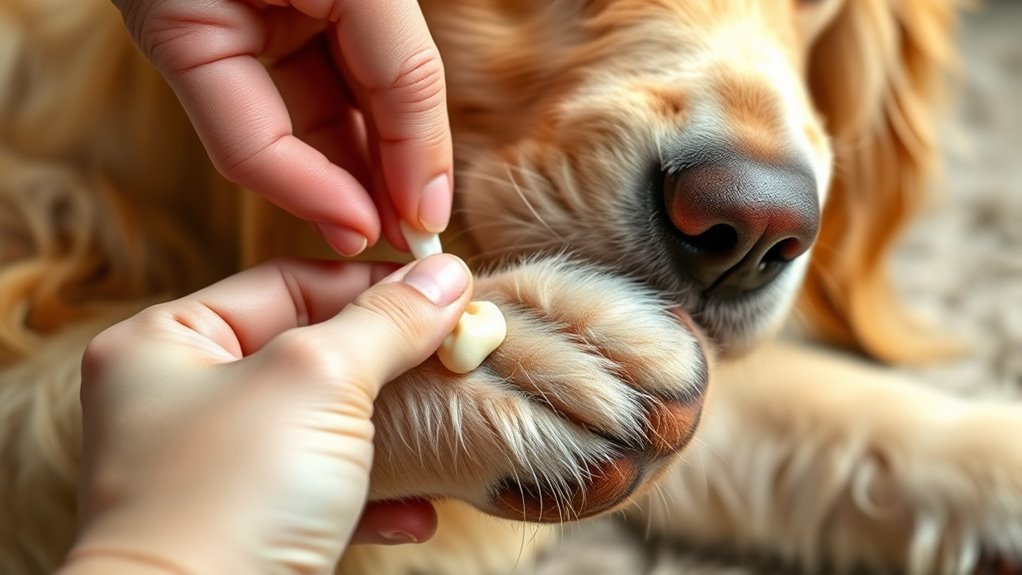
Although you should always check with your vet first, Neosporin can be safe for treating minor superficial wounds on your dog. This topical ointment contains antibiotics that help prevent infection in small, clean cuts or scrapes.
Always consult your vet, but Neosporin can safely treat minor superficial wounds on your dog.
When you use Neosporin on minor wounds, it can support faster healing by keeping bacteria at bay. However, it’s important to avoid applying it to deep, puncture, or infected wounds without your veterinarian’s guidance.
Keep in mind that dogs may lick the ointment off, which can cause gastrointestinal upset if ingested in large amounts. Also, watch for any allergic reactions like redness, swelling, or irritation at the treatment site.
If you notice these signs, stop using Neosporin and consult your veterinarian immediately. To sum up, with proper veterinary approval and careful monitoring, Neosporin can be a safe and effective option for minor wound treatment in dogs.
How to Apply Neosporin and Prevent Side Effects

Before you apply Neosporin to your dog’s wound, make sure to clean the area thoroughly with mild soap and water. This helps reduce the risk of infection.
Apply a thin layer of Neosporin using a cotton swab or a clean finger. Focus only on superficial wounds and avoid using too much ointment because excess can attract dirt and cause more irritation.
To stop your dog from licking the treated area, consider using an Elizabethan collar or a bandage. This keeps the ointment in place and helps the wound heal faster.
After applying Neosporin, keep an eye on your dog for any allergic reactions like redness, swelling, or itching. If you notice any of these side effects, or if the wound gets worse or shows signs of infection, contact your vet right away.
Sticking to minor wounds and staying alert helps you use Neosporin safely. This way, you minimize risks and prevent any complications.
Frequently Asked Questions
What Antibiotic Ointment Can I Use on My Dog?
You can use pet-safe antibiotic ointments like Mupirocin or Veterycin on your dog. Always check with your vet first to make certain the ointment suits your dog’s wound.
Avoid using human products since they might harm your furry friend. It’s better to be safe and stick to what’s made specifically for pets.
What Can You Put on a Dog’s Wound?
You can use pet-safe antibiotics like Mupirocin or natural remedies such as diluted iodine, but avoid human ointments.
Make sure to clean the wound first, then cover it to protect from licking.
It’s always best to check with your vet to ensure whatever you use is safe for your dog.
What Type of Ointment Is Ok for Dog Wounds?
You should use pet-safe antibiotic ointments like Veterycin or Mupirocin for your dog’s wounds. These are formulated specifically for canine skin and are safer than human ointments.
Always clean the wound first, and it’s a good idea to check with your vet before applying anything. That way, you make sure you’re using the right treatment for your dog’s specific situation.
Can I Put Human Neosporin on My Dog?
Using human Neosporin on your dog is like walking a tightrope—you can, but only with care. Always check with your vet first, apply sparingly, and prevent your dog from licking the ointment to avoid issues.
Just be cautious, okay? It’s always better to be safe than sorry when it comes to your furry friend’s health.
Conclusion
You can cautiously care for your canine’s cuts with Neosporin, but always check with your vet first. Applying it properly prevents pesky problems and promotes painless, prompt healing.
Remember, a little love and careful cleaning can comfort your companion and curb complications. Keep your furry friend feeling fantastic by treating minor wounds with thoughtful tenderness.
When using Neosporin on your dog, it’s important to avoid large amounts and watch for any signs of irritation or allergic reactions. If your dog licks the ointment excessively, consider using an e-collar to prevent further issues.
Stay safe, stay smart, and show your dog the soothing support they deserve! Using Neosporin responsibly can help minor cuts heal quickly, keeping your pet happy and healthy. Always consult your vet to ensure the best care for your furry friend’s wounds.





One Comment