

How to Understand If Dog Mounting Is a Sign of Dominance
You can tell your dog’s mounting is about dominance if they mount with a stiff body, direct eye contact, and a confident, persistent stance—especially if they ignore commands to stop.
This behavior often aims to establish hierarchy and won’t include submissive signals afterward.
If your dog’s mounting keeps escalating despite redirection, it’s a sign of assertiveness rather than play.
Keep watching closely, and you’ll uncover more about what drives this behavior and how to manage it effectively.
Key Takeaways
- Dominance mounting features a stiff posture, direct eye contact, and a confident, assertive stance. It’s pretty clear when a dog is trying to show who’s in charge.
- This behavior sticks around even if you try to redirect your dog or give a command. Basically, the dog isn’t easily swayed or trained out of it.
- Usually, dominance mounting happens because the dog wants to establish a hierarchy. It often targets other animals or even people.
- After the behavior, you won’t see any submissive signals from the dog. In fact, if you don’t address it, the mounting might even get worse.
- Now, playful mounting looks different. It’s more relaxed, stops when you redirect the dog, and usually happens when your dog is just having fun or feeling excited.
How to Tell If Your Dog’s Mounting Is About Dominance

Although dogs may mount for various reasons, you can tell if your dog’s mounting is about dominance by observing their body language and context. When a dog mounts to assert dominance, you’ll notice a stiff body posture, direct eye contact, and a confident stance.
This behavior often happens when your dog is trying to establish hierarchy over other animals or even people. Unlike playful mounting, dominance mounting tends to persist and escalate despite your attempts at redirection or training commands.
After mounting, a dominant dog usually won’t show submissive signals like lowering their body or avoiding eye contact. Proper supervision and consistent training are key to recognizing and managing this behavior.
Other Common Reasons Dogs Mount (And How to Spot Them)
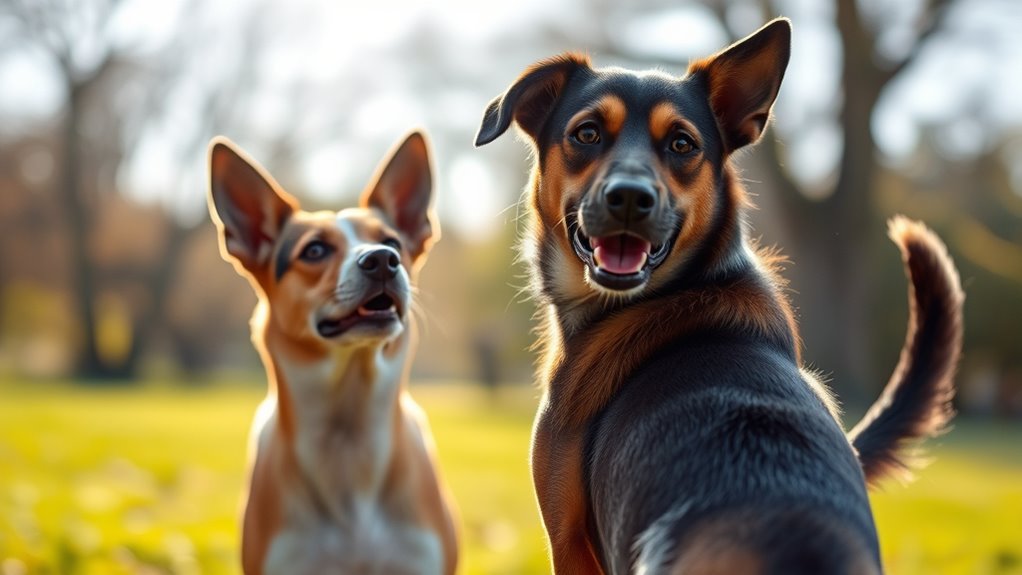
Dominance isn’t the only reason your dog might mount. Mounting behavior often reflects excitement, play, or arousal rather than a power move.
It can also serve as a self-soothing reaction to stress or overstimulation. Hormonal influences, especially in puppies and unspayed females, play a big role in mounting as part of normal development.
Here’s how you can spot other common mounting triggers in your dog’s behavior:
| Reason | How to Spot It |
|---|---|
| Play/Excitement | Mounting during active, playful moments |
| Stress/Anxiety | Mounting when your dog seems uneasy |
| Hormonal Changes | Increased mounting in unspayed females or during heat |
| Overstimulation | Mounting after intense social interactions |
Understanding these triggers helps you address the root cause effectively. This way, you can improve your dog’s comfort and behavior.
Frequently Asked Questions
Is Mounting a Sign of Dominance?
Mounting isn’t usually a sign of dominance. You’ll notice it’s often about excitement, stress, or play.
If it’s persistent and aggressive with other dominant behaviors, then it might be, but that’s pretty rare. So, most of the time, it’s nothing to worry about.
At What Age Do Male Dogs Hump the Most?
Think of adolescence as a stormy sea; male dogs hump most between 6 to 18 months when hormones surge like waves.
You’ll notice this behavior calming as they mature, usually around 2 to 3 years old. It’s just their way of dealing with all those new feelings and energy.
What Are Signs That a Dog Is Trying to Dominate You?
You’ll notice persistent staring, blocking your movement, and placing paws on you. Your dog might growl, guard resources, or ignore commands.
If they escalate behaviors or invade your space, they’re likely trying to dominate you. It’s their way of saying they want control. Just something to watch out for!
How to Correct Mounting Behavior in Dogs?
You can correct mounting by redirecting your dog to commands like “sit,” rewarding calm behavior, and using a short leash to interrupt.
Managing triggers that cause excitement is also important. If the behavior keeps happening despite your efforts, it might be a good idea to consider a trainer.
Conclusion
Understanding why your dog mounts can help you respond appropriately. Remember, mounting isn’t always about dominance. Studies show that up to 70% of dogs mount for reasons like excitement, stress, or play.
By observing your dog’s body language and the situation, you can better identify the cause. This insight helps you address the behavior calmly and effectively.
So, if you want to understand if dog mounting is a sign of dominance, keep in mind it often isn’t. Paying attention to the context and your dog’s cues is key. This way, you can manage the behavior in a way that supports a happier, healthier relationship with your furry friend.





5 Comments