Why Does My Dog Smell Like Fish?
If your dog smells like fish, it’s often because of impacted or infected anal glands near their rectum releasing a strong odor. These glands can get clogged or inflamed, leading to that unmistakable fishy smell. Certain breeds are more prone to this, so keep an eye out if your dog is one of them.
You might notice your dog scooting their bottom on the floor or licking around their rear quite a bit. That’s usually a sign something’s off with their anal glands. But it’s not just anal glands—skin infections or other health issues like urinary tract infections can cause a similar fishy odor.
Keeping your dog’s hygiene in check is super important. Regular visits to the vet help catch and manage these problems early.
Stick with me to learn how to spot and stop that fishy smell effectively.
Key Takeaways
- A strong fishy odor usually comes from impacted or infected anal glands near the dog’s rectum. It’s a pretty common cause of that smell.
- Certain breeds like Cocker Spaniels and Shih Tzus are more prone to gland issues causing fishy smells. So, if you have one of these breeds, keep an eye out.
- Skin infections, including bacterial or yeast infections, can produce a persistent fishy scent. These can sometimes be tricky to spot at first.
- Frequent scooting, licking, or redness around the anal area often indicates anal gland problems. If you notice these signs, it’s a good idea to check with your vet.
- Regular hygiene and vet check-ups for gland expression help prevent and treat fishy odors. Keeping up with these can really make a difference.
Why Does My Dog Smell Like Fish? Causes Explained

If your dog smells like fish, it’s often due to issues with their anal glands. These glands can become impacted or infected and release a strong odor.
A fishy dog smell often signals impacted or infected anal glands releasing a strong odor.
They’re located near the rectum and sometimes get clogged, which causes that distinct fishy smell. Certain breeds, like Cocker Spaniels and Shih Tzus, are more prone to this problem.
Besides anal glands, skin infections—whether bacterial or yeast—can also cause your dog’s smell to turn fishy. This happens because of bacterial buildup on the skin.
Poor hygiene or health issues such as urinary tract infections and vaginitis may also contribute to persistent odors. Sometimes, dietary changes might affect the scent glands and overall hygiene too.
If you notice a consistent fishy smell, it’s important to consider these health issues promptly. Taking care of your dog’s hygiene and diet plays a vital role in managing the odor and keeping your dog healthy and comfortable.
How to Spot and Stop Fishy Odors in Your Dog
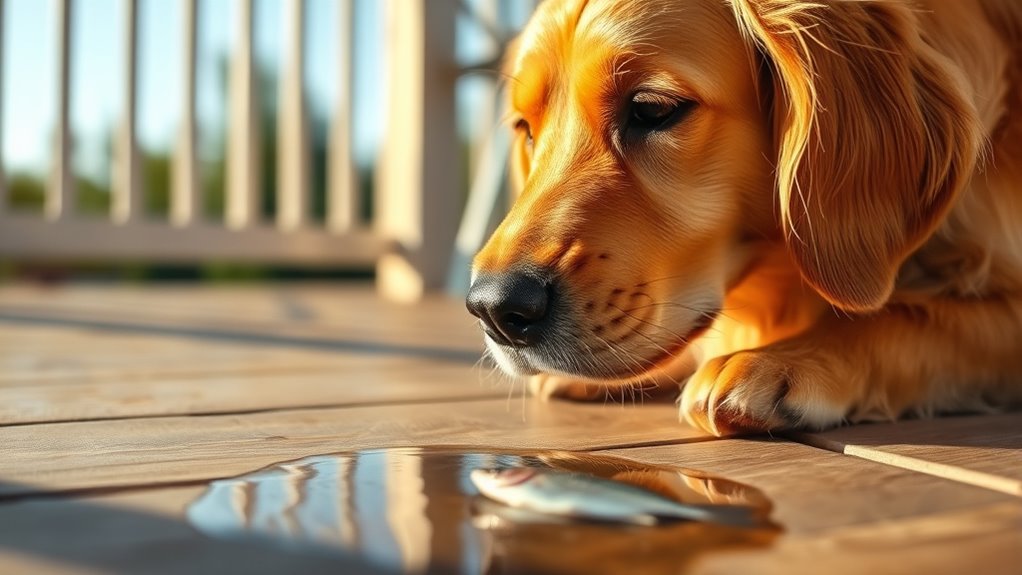
When your dog starts scooting or licking their anal area frequently, you should pay close attention. These behaviors often signal impacted anal glands causing that fishy odor.
Persistent dog odor despite regular washing points to underlying issues like impaction or infection. Maintaining good dog hygiene around the anal area helps prevent odor buildup, but sometimes gland expression by a veterinarian is necessary.
| What to Watch For | What to Do |
|---|---|
| Scooting or licking | Check the anal glands for swelling |
| Persistent fishy odor | Schedule a vet visit |
| Signs of infection (redness, swelling) | Follow vet treatment plan |
| Impacted glands | Regular gland expression |
Spotting and addressing these problems early stops fishy odors and keeps your dog comfortable. If you notice signs of infection or persistent odor, don’t hesitate to consult your veterinarian for proper diagnosis and treatment.
Frequently Asked Questions
How Do You Fix a Dog That Smells Like Fish?
You fix your dog’s fishy smell by regularly bathing them with odor-neutralizing shampoo. It really helps keep that smell under control.
Also, make sure to maintain their oral hygiene and ensure they’re eating a balanced diet. These things can make a big difference.
Don’t forget to have a vet check and express their anal glands if needed. If the smell sticks around despite all this, it’s best to get professional veterinary care.
How Do I Stop My Dog’s Glands From Smelling?
Don’t let your dog audition for “Stinky Fish of the Year.” You’ll stop the smell by regularly expressing their anal glands, keeping the area clean, trimming hair, and feeding a fiber-rich diet for natural odor control.
It’s easier than it sounds, and your pup will thank you for it! Just a little routine care goes a long way in keeping things fresh and comfortable.
How Do You Know if Your Dog Needs His Glands Squeezed?
You’ll know your dog needs his glands squeezed if he scoots, licks, or bites his rear frequently. You might also notice he’s uncomfortable sitting or defecating.
Sometimes, there’s a fishy smell or swelling near his anus, too. These are clear signs that it’s time to check his glands.
Can a UTI Make a Dog Smell Like Fish?
Yes, a UTI can make your dog smell like fish because of bacteria and compounds in the urine.
If you notice this kind of odor along with frequent urination or signs of discomfort, it’s a good idea to take your dog to the vet right away.
Don’t wait too long—getting treatment early can make a big difference for your pup’s health.
Conclusion
If your dog smells like fish, don’t ignore it—this fishy odor is your pet’s way of waving a red flag.
It could signal anything from skin infections to anal gland issues, both needing your attention. You wouldn’t overlook a smoke alarm, so don’t overlook your dog’s scent.
Act quickly, check with your vet, and keep your furry friend fresh and healthy.
After all, a happy dog means a happy home. Taking care of your dog’s fishy smell not only helps with their comfort but also prevents bigger health problems down the road. So, if your dog smells like fish, it’s time to pay attention, get a vet’s advice, and ensure your pet stays clean and well. That way, you’ll keep your dog feeling great and your home smelling fresh too!