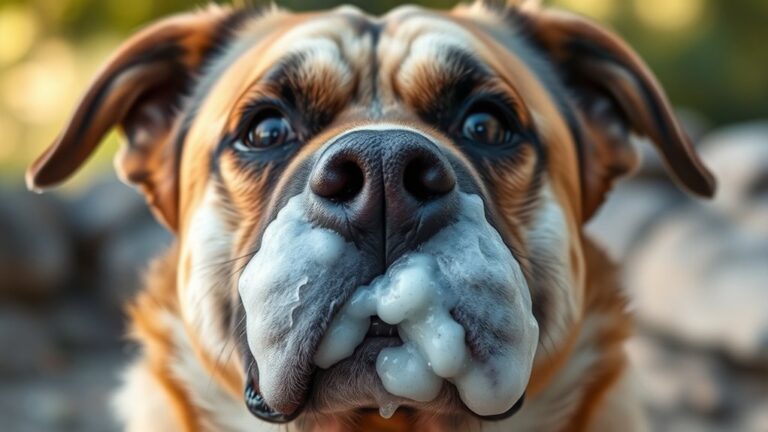

Why Does My Dog Snore When Sleeping?
Your dog’s snoring usually comes from breed-related airway issues, especially if they have a short nose or unique skull shape. Things like narrowed nasal passages, an elongated soft palate, or extra tissue can partially block airflow. This blockage causes those funny noises while they sleep.
Overweight dogs might also have throat narrowing due to fat deposits. So, if your pup is carrying extra weight, that could be making the snoring worse.
While occasional snoring is pretty common and usually nothing to worry about, persistent or worsening sounds might mean your dog needs a vet’s attention. Keep exploring to understand when snoring could signal a deeper problem.
Key Takeaways
- Dog snoring often results from breed-specific anatomy, especially in brachycephalic breeds with shortened skulls and narrow airways. These breeds are more prone to snoring because their airways are naturally smaller.
- An elongated soft palate can partially block the airway, causing vibrations that produce snoring sounds during sleep. It’s kind of like when something gets in the way of the airflow.
- Excess weight can lead to fat deposits around the throat, narrowing the airway and increasing snoring likelihood. So, if your dog is carrying extra pounds, that might be part of the reason they snore.
- Snoring may also stem from airway obstruction or respiratory issues, especially if it suddenly gets worse or becomes loud and persistent. It’s good to keep an eye on any changes like that.
- Veterinary evaluation is important if snoring is accompanied by breathing difficulty, discoloration, or other concerning symptoms. When in doubt, it’s always best to check with your vet to keep your furry friend safe.
Why Dogs Snore: Common Causes and Breed Factors

Although snoring might seem harmless, it often stems from specific causes linked to your dog’s breed and anatomy. Brachycephalic breeds like pugs, bulldogs, and French Bulldogs commonly experience snoring due to their unique breed conformation.
Their shortened skulls and narrowed nasal passages create airway obstruction, making it harder for air to flow freely. An elongated soft palate often worsens this by partially blocking the airway, increasing airway resistance during sleep. These factors cause vibrations in the soft tissues, which produce snoring sounds.
You might notice breathing difficulties in these breeds, especially during rest. Other snoring causes include fat deposits around the throat in overweight dogs, which further narrow the airway.
In large breeds, nerve issues can affect the larynx, also contributing to snoring in dogs. Understanding how breed anatomy influences snoring can help you recognize why your dog makes those nighttime noises and the role airway obstruction plays in their breathing patterns.
When to Worry About Your Dog’s Snoring and Seek Veterinary Help
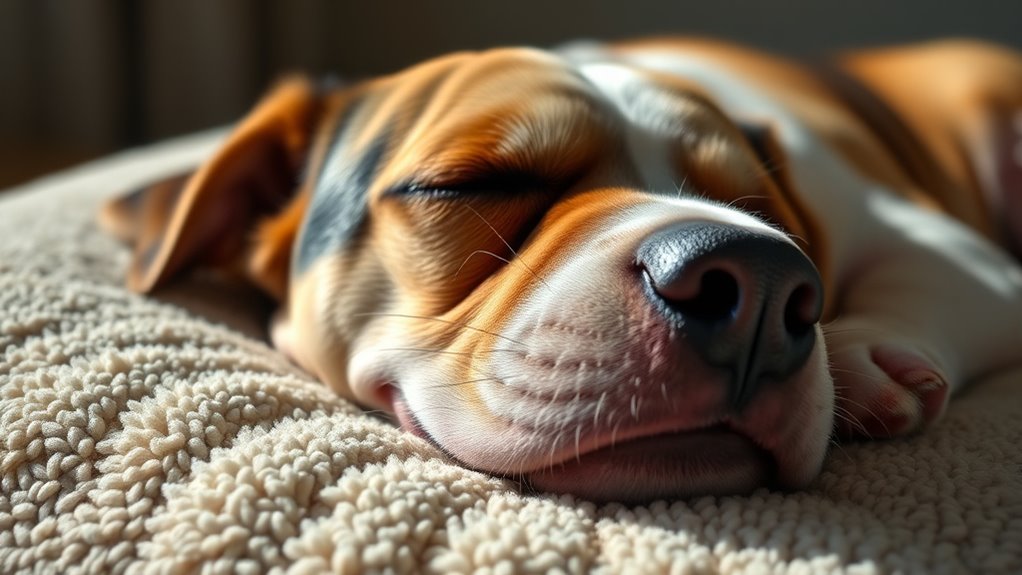
If your dog’s snoring suddenly starts or gets worse, you should pay close attention and consider contacting your vet. New or persistent snoring could signal an airway obstruction or other health concern.
You should seek veterinary advice especially if snoring comes with respiratory distress, labored breathing, or signs of distress like blue gums or fainting during sleep. These symptoms indicate immediate evaluation is necessary.
Also, if your dog’s snoring is accompanied by discharge, bleeding, coughing, gagging, or facial deformities, don’t hesitate to seek veterinary help. Even lifelong snorers with persistent loud snoring need professional assessment to rule out underlying health issues.
Ignoring these signs could lead to worsening problems. When you notice any changes or concerning symptoms linked to snoring, consult your vet promptly.
Early intervention helps ensure your dog’s comfort and overall health, preventing complications related to airway or respiratory problems.
Frequently Asked Questions
Is It Normal for a Dog to Snore While Sleeping?
Yes, it’s normal for your dog to snore while sleeping, especially if they belong to a brachycephalic breed or sleep in certain positions.
Just watch for sudden changes or breathing issues that might need a vet’s attention. If something feels off, don’t hesitate to get it checked out!
When Should I Worry About My Dog Snoring?
You should worry if your dog’s snoring is loud, persistent, or gets worse over time. Also, if it comes with coughing, gagging, or labored breathing, that’s a red flag.
Sudden changes in their snoring or if your dog shows exercise intolerance are signs you should see your vet promptly. Don’t wait it out—getting a professional opinion is always the best move.
Are Dogs Happy When They Snore?
If your dog snores softly while curled up after a long walk, it usually means they’re happy and relaxed.
But don’t ignore loud or sudden snoring—it might signal discomfort or health issues requiring attention.
Do Dogs Start Snoring as They Get Older?
Yes, dogs often start snoring more as they get older because their throat muscles weaken and tissues relax.
You should watch for severe snoring, though, since it could signal health issues needing a vet’s care. Just keep an eye on it!
Conclusion
Now that you know why your dog snores, you can watch for common causes and understand breed factors. It’s also important to recognize when it’s time to seek help.
You can guarantee their comfort, protect their health, and enjoy peaceful nights together. Remember, snoring can be normal, but it might also signal a problem.
So, stay attentive and act promptly. Keeping an eye on your dog’s snoring can help you catch issues early.
By doing this, you’ll keep your furry friend happy and healthy every day. Understanding why dogs snore helps you provide the best care and ensure restful sleep for both of you.